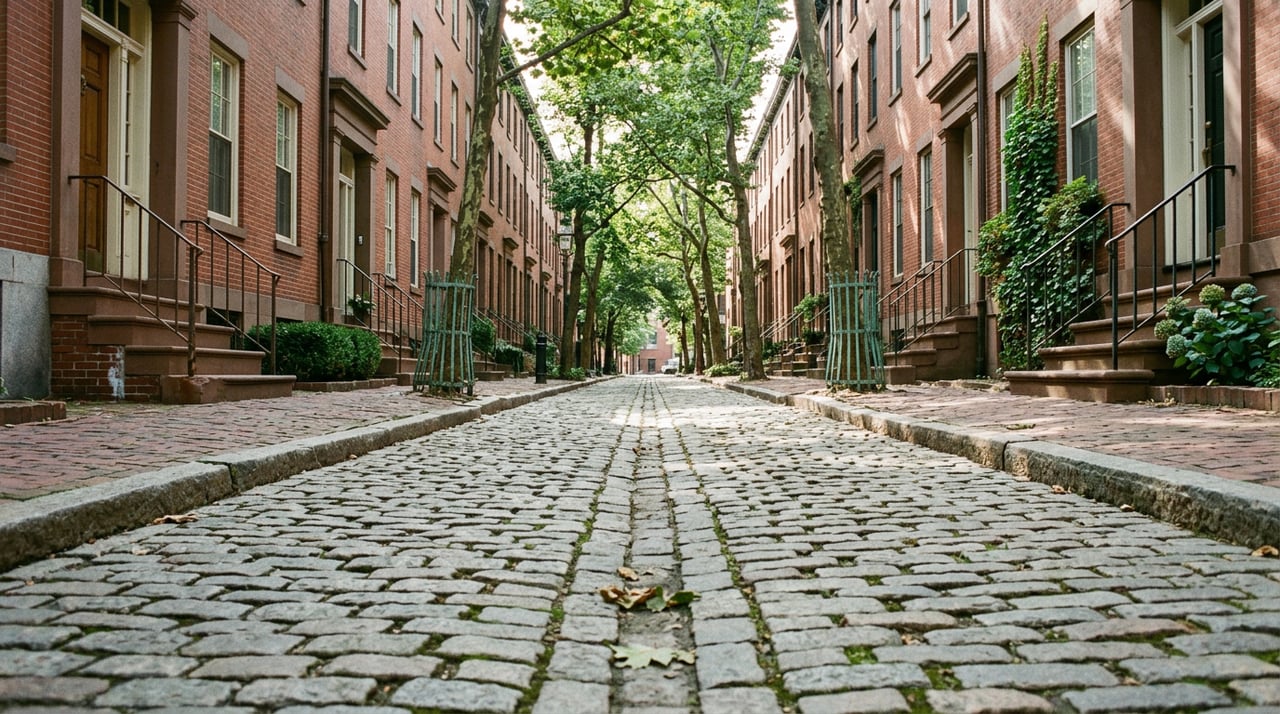
Walk two minutes off Montague Street, past the shops and the Sunday crowds, and the sidewalk changes first. Then the street itself changes, from smooth asphalt to the uneven, sun-warmed stones of Joralemon Street. This is Willowtown, the pocket of Brooklyn Heights bounded roughly by Willow Place, Columbia Place, and that stretch of Joralemon between Hicks and Furman. It has its own restaurant, its own theater company, its own playground with an unlikely rock and roll footnote, and its own neighborhood association that has spent decades protecting things Montague Street never had to think about.
The thing worth knowing about Willowtown is not a business opening or a new tenant. It is what the neighborhood association actually chose to fight for, and what that choice reveals about how this corner of the Heights runs compared to the commercial strip one block over.
A Street the Subway Almost Won
Joralemon Street's cobblestones are rare in New York City, and the Willowtown Association has treated them as an ongoing responsibility since close to its founding. The stones sit directly above subway tracks, and for years residents on Joralemon, Willow Place, and Columbia Place felt vibrations from trains passing underneath their houses. The association pushed for meetings with the MTA, and the result was a repair to the roadbed after research identified it as the actual source of the shaking, not the trains themselves.
That is a different kind of neighborhood fight than the ones that dominate coverage of Brooklyn Heights generally, where the recurring subjects are storefront vacancies, Open Streets programming, and the decades-long argument over the BQE. Willowtown's version of infrastructure advocacy was about protecting a street surface from the transit system running beneath it. The stones are still there. You can still feel them under your shoes walking from Willow Place toward the water.
One Address, One Turnover
If Montague Street's identity is built on retail turnover, Willowtown's is built on the absence of it. The neighborhood's only true restaurant sits at 20 Columbia Place, and it has had exactly one occupant change since it first opened. Two Brooklyn-raised brothers opened Iris Cafe there in 2009, and it became a fixture, the kind of place locals describe as tucked away rather than discovered. When it eventually closed, chef Charlie Mitchell took over the same address with Clover Hill, a seafood-forward kitchen that drew a Webby-winning video from Eater documenting Mitchell's team breaking down Norwegian crab and Montauk stripers.
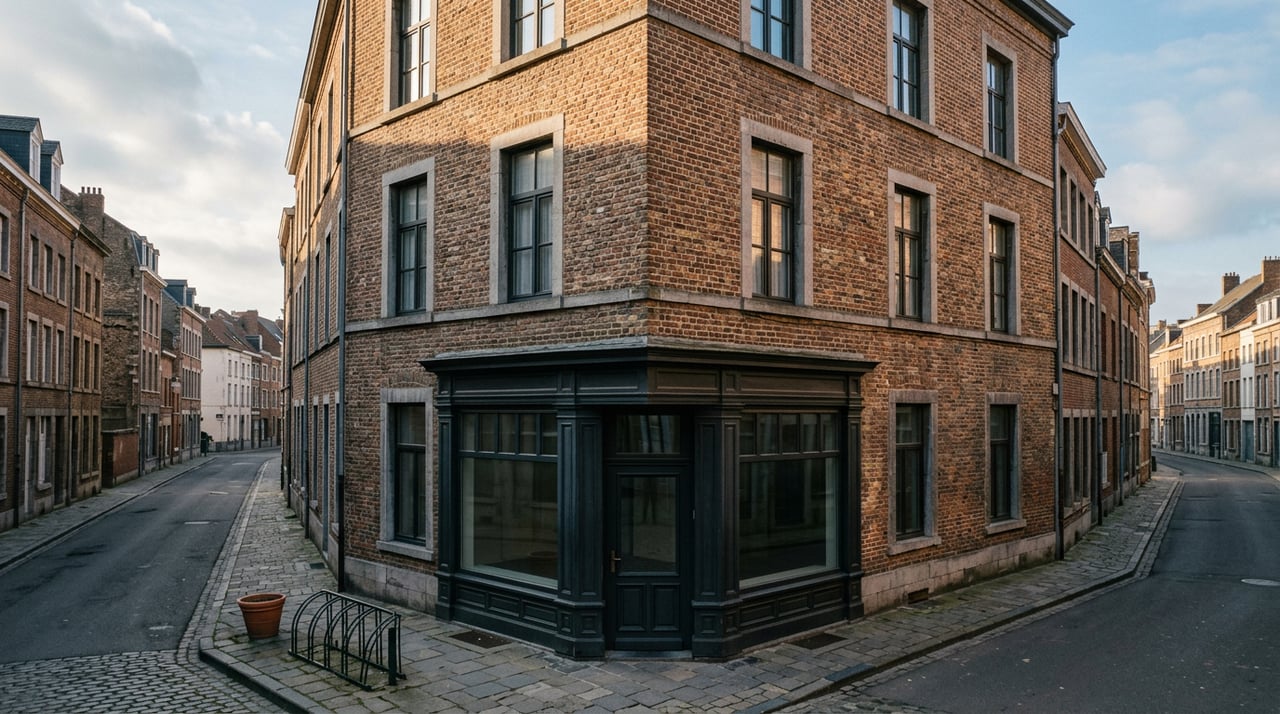
A block away, at the corner of Joralemon and Columbia Place, River Deli has never changed hands at all. Two young owners who were themselves Riverside residents opened it in 2010 in a space that had been a corner deli for years before that, and they kept the name on purpose. Between the two spots, that is the entire restaurant scene in Willowtown, and it has moved at a pace that would be unremarkable anywhere except a city where storefronts elsewhere change every year or two.
A Theater That Outlasted Its Roommates
The Alfred Tredway White Community Center on Willow Place started life in 1867 as a chapel connected to the First Unitarian Church, and it reopened as a community center in December 1962 with three founding tenants: the Heights Players, the Brooklyn Heights Community Nursery School, and the Roosa School of Music. Only one of those three is still there. The nursery school's space eventually became home to St. Ann's Preschool, and the music school gave way to the S.E.M. Ensemble. The Heights Players, a community theater company, has kept staging productions in the same building for more than six decades, outlasting both of its original roommates.
That kind of institutional persistence is easy to miss if you only pay attention to what opens and closes on the commercial blocks nearby. It is also the clearest sign that Willowtown's civic life runs on a much longer clock than the retail cycle around it.
The Basketball Court With a Beastie Boys Footnote
State Street closes to traffic as part of Willowtown's Open Streets footprint, and the playground along that block carries a name most visitors would not expect. Originally called State Street Park and later Palmetto Playground, the space was renamed in 2013 in honor of Adam Yauch, the Beastie Boy known as MCA, who grew up in Brooklyn Heights and learned to ride a bike and play basketball on that same court. The playground is dog friendly, with an off-leash run, and it functions today as one of the few genuinely local green spaces in this stretch of the neighborhood, not a destination park like the Promenade or Brooklyn Bridge Park, just a place where residents happen to raise kids and walk dogs a few doors from where a member of one of Brooklyn's most famous bands once did the same.
The One Day Willowtown Opens Up
Willowtown's Open Streets run daily, from eight in the morning to nine at night, across Columbia Place between Joralemon and State Street, along Joralemon between Hicks and Furman, and along State Street between Hicks and Columbia Place. Unlike Montague Street's programmed Sunday closures, which draw vendors and citywide attention, Willowtown's version is quiet by design. Most days it is simply a car-free residential block.
The exception is one Saturday each spring, when the Willowtown Association hosts Discover Columbia Place. This year's edition ran April 25 from 11 a.m. to 5 p.m., with local vendors Cloudy Donut, Laundry & Latte, Nako, and River Deli setting up alongside neighbor-run stoop sales, a Willowtown Tree Walk, garden and dog run cleanups, and a live performance from the Heights Players. Willowtown residents can reserve a free stoop sale spot directly through the association's own site, and the entire day is organized by neighbors rather than a business improvement district. It is the one afternoon a year when the quietest streets in Brooklyn Heights briefly look like the busiest ones, and then they go back to being what they were the day before.
What the Pattern Actually Says
None of this is a coincidence. A neighborhood association that spent its early energy negotiating with the MTA over subway vibrations under a cobblestone street was never going to build its identity around restaurant turnover or event programming. Willowtown's civic priorities have consistently pointed toward preservation, infrastructure, and continuity rather than commerce or visibility, and the pattern holds across every part of the neighborhood: one restaurant address with a single occupant change since 2009, a theater company that outlasted its original building mates by decades, a playground renamed for a local kid who grew up to be famous, and an annual open day that the residents themselves run rather than outsource.
If you already live in this stretch of Brooklyn Heights, none of this changes your commute or your grocery run. What it does is explain why Willowtown feels different from the blocks around Montague Street even though the two are a five-minute walk apart. One corner of the neighborhood optimized for foot traffic and storefront churn. The other optimized for keeping its cobblestones intact and its community theater's lights on. Both are still Brooklyn Heights. They just run on different clocks.
If you are curious what any of this means for property values or timing a move in or out of this pocket of the neighborhood, that is a longer conversation, and one Jarrod Duncan is glad to have. Let's Connect.