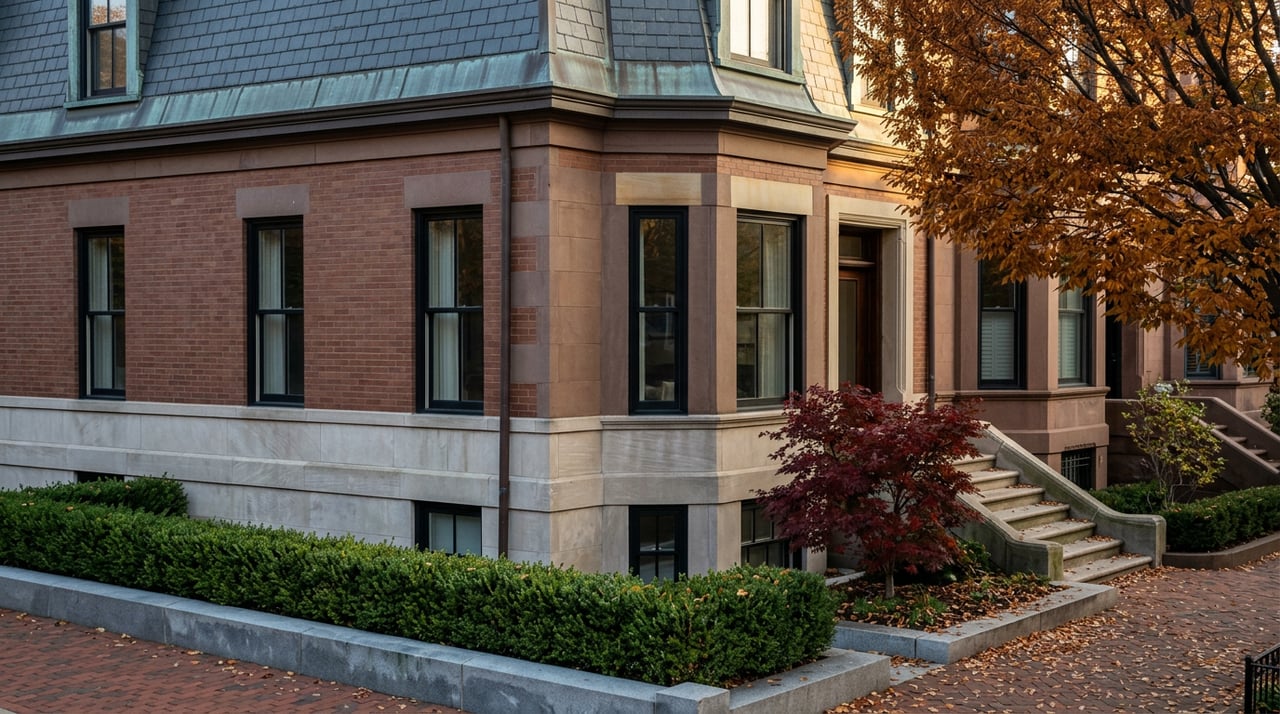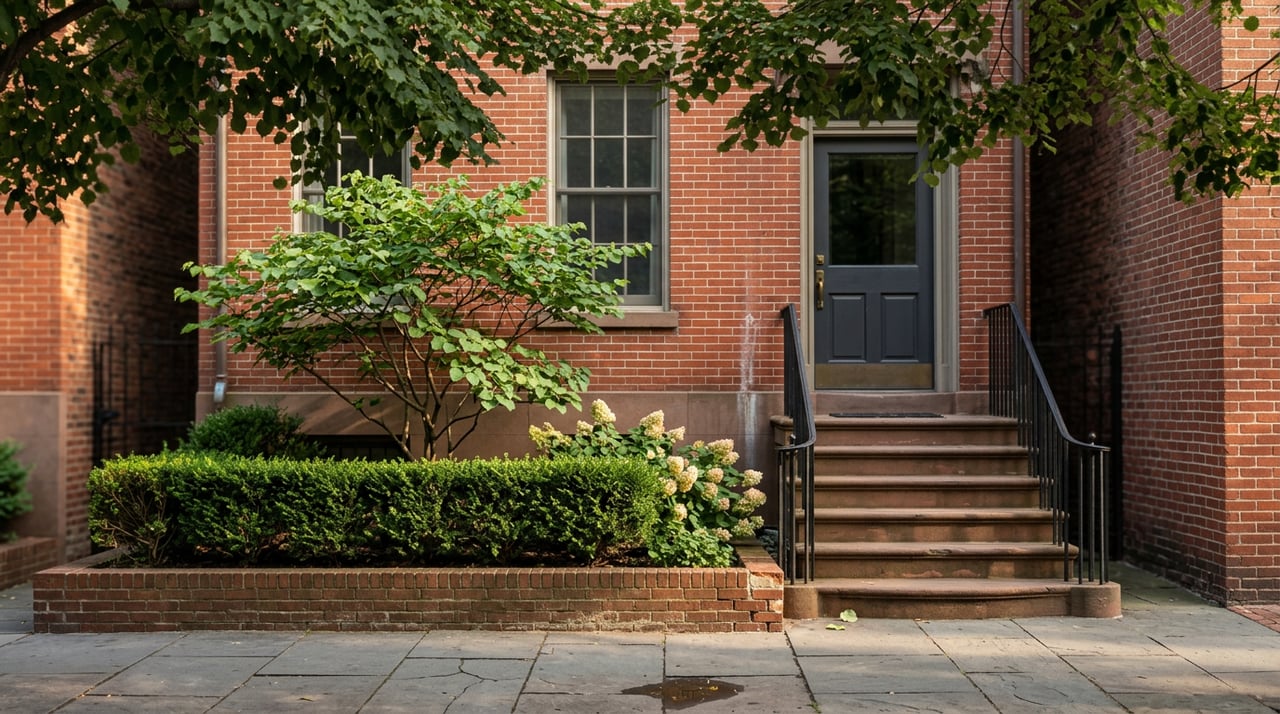
A historical plaque commemorating one of the most consequential minutes in American sports history is sitting in storage right now, waiting to be reinstalled somewhere on a construction site at Montague Street and Cadman Plaza West. It once marked the spot where Brooklyn Dodgers general manager Branch Rickey signed Jackie Robinson to a minor-league contract in 1945, inside the Mechanics Bank Building that stood there for decades. That building is long gone, replaced by a six-story office tower in 1962. As of June 2026, that building is gone too. Demolition wrapped that month, and on July 2, 2026, developer Landau Properties broke ground on One Montague Place, a 47-story, 672-foot residential tower slated to hold 46 condominiums, 90 rental apartments, and a jazz club, with completion targeted for 2029.
Hill West Architects, the firm designing the tower, has called it a contemporary extension of the Brooklyn Heights neighborhood. That phrase is carrying more weight than it lets on. The parcel at 205 Montague sits right at the edge of the neighborhood's identity, but it is not inside the boundary that actually restricts what can be built on a Brooklyn Heights lot. The Brooklyn Heights Historic District, designated in 1965 as New York City's first, runs along Cadman Plaza West and stops there. One Montague Place is rising on the outside of that line, which is exactly why it's allowed to rise at all.
The part of this story worth understanding isn't the tower's height or its price tag. It's the line itself: where it runs, why it holds where it does, and what that means for anyone comparing a listing "in Brooklyn Heights" against a listing "in the Brooklyn Heights Historic District." Those two phrases sound interchangeable. They aren't, and the gap between them is currently visible from the sidewalk.
Where the Line Actually Runs
New York's Landmarks Preservation Commission designated Brooklyn Heights in November 1965, and the boundary it drew is specific, not sentimental. The district runs along Cadman Plaza West on the north and east, the Brooklyn-Queens Expressway on the west, Atlantic Avenue on the south, and an irregular line that partly follows Clinton and Henry Streets. Everything inside that perimeter answers to the Commission for exterior work. Everything outside it, including the northwest corner of Montague and Cadman Plaza West, does not.
That corner has known this for a while. Public filings for a tower on this site go back to at least 2012, when a developer floated a plan to double the size of the existing office building. An industry insider told the Brooklyn Eagle back then that a lot more could be built on that lot than the filed plans suggested. That comment holds up. The lot's zoning entitles it to more than 300,000 square feet of development, and nothing in the historic district's rulebook applies to it, because the historic district doesn't reach that far.
The Rematch Brooklyn Heights Lost
If you assume a neighborhood group as established as the Brooklyn Heights Association, founded in 1910 and credited with winning the city's first landmark designation, could simply extend that protection to the next block over, the record says otherwise.
When the Landmarks Preservation Commission designated the Borough Hall Skyscraper Historic District in 2011, the BHA specifically pushed to include the north side of Montague Street between Cadman Plaza West and Clinton Street, a stretch known locally as Bank Row. The Commission left it out. The BHA didn't drop the issue. Continued advocacy got the LPC to calendar a public hearing in October 2016 to consider two of those buildings, 181 and 185 Montague Street, for individual landmark status. The first was built in 1903 as the People's Trust Company Building, the second in 1930 as the National Title Guarantee Building, described by architectural historian Francis Morrone as an important precursor to Rockefeller Center. Together with the Chase branch at 177 Montague, preservation advocates consider the trio one of the most significant clusters of early 20th-century commercial architecture on the block.
None of that architectural pedigree moved the boundary. The lesson isn't that these buildings lack merit. It's that historic district lines are drawn once, revisited rarely, and can hold even against organized, well-funded, politically connected opposition. A century of advocacy history is not the same thing as a guarantee.
That exclusion has a visible track record. Along this same stretch of Cadman Plaza West and Montague Street, outside the boundary, new construction has arrived in waves over the past two decades:
- One Clinton, a Marvel Architects-designed condo tower that also houses a Brooklyn Heights Public Library branch at its base
- The conversion of the Brooklyn Trust Company Building into a dozen luxury condominiums
- The Pierrepont, a 19-story rental building at 146 Pierrepont Street
- Now, One Montague Place, at 47 stories the tallest of the group
Three towers on one excluded wedge of blocks is not a coincidence. It's what the boundary line makes possible, block after block, on one specific side of it.
Two Sale Prices, One Neighborhood
The clearest evidence of what that line is worth in dollars sits in the sales record of the buildings it produced. When One Clinton sold out, it achieved prices exceeding $2,000 per square foot, among the highest recorded in Brooklyn. The Brooklyn Trust Company Building conversion, sitting just inside the historic district's protected rowhouse fabric a couple of blocks away, sold its twelve units around $1,400 per square foot.
That gap isn't explained by finish quality or square footage alone. It's explained by what the boundary line permits: unobstructed height, harbor views, and skyline exposure that a landmarked rowhouse simply cannot offer, no matter how well it's renovated. Being on the outside of a line drawn in 1965 is worth several hundred dollars a square foot in the buildings that have actually sold on that side of it.
What This Means If You're Comparing Two Addresses
For a buyer weighing a prewar co-op deep inside the historic district against new construction near its edge, the practical question isn't which option is more "Brooklyn Heights." Both are. The question is which side of Cadman Plaza West the building sits on, and what that answers for you.
Inside the boundary, exterior alterations go through Landmarks Preservation Commission review, which is part of why blocks like Willow Street or Pierrepont look largely unchanged from a century ago. That stability is a known, priced-in feature. Outside the boundary, a lot's entitlement is a matter of zoning, not neighborhood character, and the last twenty years show that entitlement gets used.
The LPC publishes an official map of the Brooklyn Heights Historic District boundary, and it's worth checking against any specific address before assuming what "historic district" does or doesn't cover for that parcel. A listing description that says "Brooklyn Heights Historic District" should match the map, not just the neighborhood name.
It's also worth remembering the boundary isn't permanently fixed. The 2016 hearing on 181 and 185 Montague shows the LPC will still consider individual landmark status for buildings outside the main district, even years after the original designation. That cuts both ways for anyone buying near the edge: proximity to the line means both a longer runway for new construction like One Montague Place, which won't finish until 2029, and a small but real chance that a future advocacy push could someday extend protection further than it reaches today.
A Few Questions Worth Answering Directly
Does living inside the historic district mean nothing can ever be built or changed there? No. It means exterior work on designated buildings requires Landmarks Preservation Commission approval. Interior renovations, and any construction on a lot the Commission doesn't oversee, aren't covered the same way.
Could a block just outside the boundary get added to the district later? It's possible but not guaranteed and not quick. The 2016 hearing on 181 and 185 Montague, more than fifty years after the original 1965 designation, shows the Commission will still consider individual expansions. It also shows how long that process can take, and that inclusion isn't assured even with sustained advocacy behind it.
Does a 47-story tower this close hurt resale value for a brownstone deep inside the historic district? The sales record so far suggests these are different products serving different buyers rather than direct substitutes. One Clinton's per-square-foot prices came in well above nearby historic district conversions, without any evidence that nearby rowhouse values suffered. Buyers choosing a view-driven condo tower and buyers choosing a landmarked rowhouse tend to be shopping for different things in the first place.
If you're weighing a specific block or address in Brooklyn Heights and want to know exactly which side of that boundary line it falls on, and what that means for financing, resale, and the next decade of construction around it, Jarrod Duncan can walk through the map with you before you write an offer. Let's Connect.