New York's pied-à-terre tax was written to apply the same rules to every high-value apartment in the city that isn't someone's primary home. In Gramercy Park, it isn't working out that way. A non-primary buyer at 200 East 21st Street and a non-primary buyer in a prewar co-op two blocks away can pay wildly different amounts under the same law, and the gap has almost nothing to do with what either of them paid.
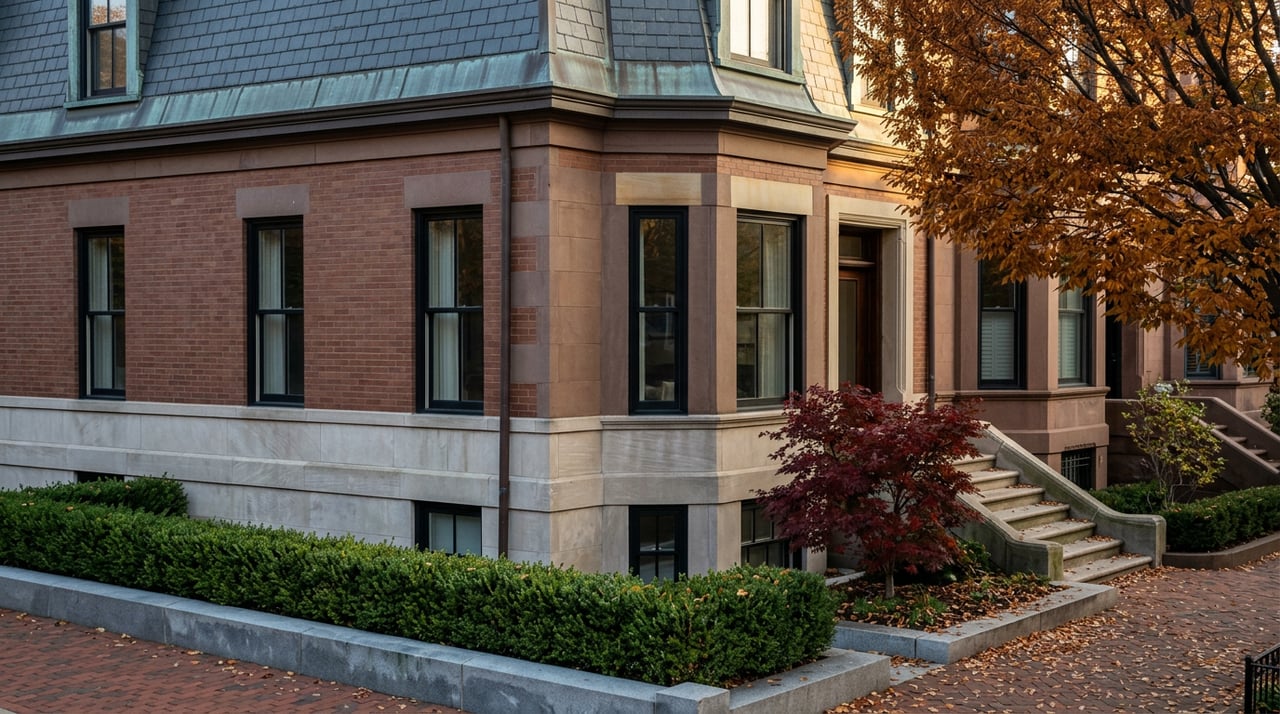
The reason sits inside a New York City assessment quirk that predates this tax by decades, and it happens to line up with the exact split that already defines who can buy where in this neighborhood. Gramercy Park is roughly 65 percent cooperative, concentrated in prewar buildings ringing Gramercy Park North, South, East, and West and along Irving Place. Its small supply of condominiums, chiefly 200 East 21st Street and the four-building Gramercy Square complex, is where non-primary, international, and investor buyers have always concentrated, largely because the neighborhood's co-op boards already restrict subletting, entity ownership, and non-primary occupancy. The new tax doesn't disrupt that sorting. It reinforces it.
What the tax actually covers, and when it started counting
New York State's pied-à-terre tax, formally Article 30-C of the state Tax Law, passed as part of the fiscal year 2027 state budget and was signed by Governor Hochul on May 28, 2026. It took effect July 1, 2026, with a sunset date of June 30, 2031 unless the legislature extends it.
The law applies an annual surcharge, not a one-time transfer fee, to condos and co-ops that a New York City Department of Finance assessment values at $1 million or more and that don't qualify as the owner's primary residence. One- to three-family homes face a higher $5 million threshold. For the first two tax years, covering July 1, 2026 through June 30, 2028, rates start at 4 percent for properties assessed between $1 million and $3 million and climb as high as 6.5 percent for higher assessed values, according to a July 2026 analysis by Holland & Knight. A second phase beginning July 1, 2028 is meant to shift to a sales-based valuation model and unify the threshold at $5 million across all property types.
One detail catches buyers off guard: the law uses January 5, 2026 as the taxable status date for determining primary residence, a date that falls nearly five months before the bill was even signed. Anyone who wasn't living in their Gramercy apartment full-time on that date is treated as a non-primary owner for the current tax year regardless of what changed afterward.
The rollout has been messy in its own right. In early August 2026, the city released an initial property list meant to satisfy disclosure requirements in the law. It swept in nearly a million properties before officials clarified that only about 31,000 homes citywide actually cleared the value screen that could trigger the surcharge, as reported by City & State New York. Formal determination letters to affected owners are due by August 30, 2026, with first bills expected as early as November.
The assessment gap that decides who actually pays
Here's the part that matters more than the headline rate. New York City doesn't assess co-ops and condos based on what they sell for. It values them as class 2 property using an income-capitalization method borrowed from comparable rental buildings rather than actual sale prices.
That produces assessed values that can sit far below sale price, especially for units in buildings that have held stable ownership for years. A co-op purchased for roughly $4 million might carry a city assessed value near $350,000, well under the $1 million Phase 1 threshold, meaning the unit could escape the tax entirely through June 2028 even though it traded well above the trigger point on the open market.
Newer condominium developments tend not to enjoy that gap. Their assessments were established more recently and generally track closer to actual sale prices, which means a comparably priced condo unit is more likely to cross the $1 million line and face the annual surcharge.
That asymmetry isn't a Gramercy-specific rule. It's a citywide feature of how the Department of Finance values property. But Gramercy is a compact enough market that the effect is easy to see building by building.
Where that gap shows up on the ground in Gramercy
Gramercy Park Towers, the 326-unit postwar cooperative at 205 Third Avenue, cleared a median of about $1,170 per square foot across four trades so far in 2026, with units selling at a median 2 percent discount to last asking price. The building already bars pieds-à-terre outright as house policy, requires a 20 percent minimum down payment, and applies a flip tax on resale, meaning nobody buying there as a second home gets past the board regardless of any tax law.
A few blocks north, 200 East 21st Street, the 67-unit LEED Gold condominium designed by BKSK Architects with interiors by Champalimaud and developed by Alfa Development, has posted a recent closed-sales average of roughly $2,064 to $2,067 per square foot. Activity there in the past year includes a twelfth-floor unit that sold for $4.2 million in a sale recorded December 30, 2025, alongside listings such as a 1,823-square-foot three-bedroom asking $3,995,000 and a 2,700-square-foot corner three-bedroom asking $6,485,000. Gramercy Square, the Woods Bagot-designed complex of four connected buildings developed by Clipper Equity, is the other main address where this buyer profile lands.
| Building | Type | Units | Recent 2026 price benchmark | Non-primary ownership |
|---|---|---|---|---|
| Gramercy Park Towers, 205 Third Avenue | Co-op, built 1964 | 326 | ~$1,170/sf median across 4 trades | Not permitted |
| 200 East 21st Street | Condo, built 2018 | 67 | ~$2,064-2,067/sf average | Permitted |
A buyer closing on a $4 million unit at 200 East 21st Street this year is transacting in a building type where the sale price and the eventual city assessment are likely to track each other closely enough to cross the Phase 1 threshold. A buyer paying the same or more for a prewar co-op nearby may find the assessed value nowhere close to $1 million, through no negotiation of their own, simply because the building has been valued as if it were a rental property for years.
Why this isn't a loophole worth chasing
It would be a mistake to read this as an argument for buying a Gramercy co-op instead of a condo to sidestep the tax. That framing misses what's actually happening on the ground here.
Co-op boards in this neighborhood already screen out the exact buyer the tax is aimed at. Gramercy Park Towers won't approve a pied-à-terre application at any price. Similar restrictions on subletting and entity or trust ownership show up across the building's co-op peers, including terms requiring a two-year escrow for LLC purchases found at 50 Gramercy Park North Owners Corp. The assessment gap that shields older co-op stock from Phase 1 exposure is real, but it's shielding a segment of the market that non-primary buyers were never going to reach in the first place.
The practical effect is that pied-à-terre and investor demand in Gramercy Park, already funneled by co-op policy into a narrow band of condominium buildings, is now the same narrow band absorbing most of the tax's real bite. The law didn't create that concentration. It landed on top of one that already existed.
Co-op boards face their own separate headache. Unlike condo or house owners, who receive individual tax bills, co-op shareholders' buildings get one consolidated bill from the city, which means the co-op corporation itself has to identify which shareholders are non-primary and collect the surcharge from them directly, an administrative burden Habitat Magazine flagged shortly after the law passed. Even buildings whose units mostly escape Phase 1 exposure on paper may still be managing new compliance work this year.
What this means if you're shopping right now
- Check your building's current Department of Finance assessed value directly before assuming either exposure or protection. Assessments vary unit by unit and building by building, and the Phase 1 gap is not guaranteed to hold for every co-op.
- If you weren't occupying a New York City home as your primary residence on January 5, 2026, plan for that date to govern this tax year's status, regardless of any move you've made since.
- If you're leasing out a unit rather than living in it, confirm whether the tenant's occupancy qualifies for the primary-residence exemption, since a unit rented to a full-time tenant generally avoids the surcharge.
- Expect a determination letter by August 30, 2026 if your unit is flagged, and budget for a possible first bill arriving as soon as November.
- Talk to a tax professional before making a purchase decision based on assessed value. The rules on entity ownership, family-member exemptions, and the city's own revenue projections, which range from an official estimate near $500 million annually down to a lower comptroller estimate closer to $350 million, are still being worked out in practice.
The citywide backdrop
Gramercy's split isn't happening in isolation. Manhattan's median sale price hit a record $1.25 million in the second quarter of 2026, up about 4.2 percent year over year, while luxury listings fell to 796, the fewest in 22 years of tracking, according to Douglas Elliman and Miller Samuel data. Condo pricing has been the engine behind those gains this year, while co-op values have moved more slowly in comparison. Gramercy Park is a small enough market that this citywide divergence shows up clearly at the building level, and the pied-à-terre tax is now layering an uneven cost on top of an uneven market.
FAQ
Does the tax apply if I live outside New York most of the year but spend real time in my Gramercy apartment? The law's primary residence test looks at where you file as your primary home. If that's outside New York City, a non-primary Gramercy unit above the assessed-value threshold is treated as covered property regardless of how many weeks you personally spend there.
Can I avoid the surcharge by renting the unit out? A unit leased to a tenant who occupies it as their primary residence for at least a year generally qualifies for the exemption built into the law.
Will co-ops keep dodging this tax after 2028? Phase 2, starting July 1, 2028, is designed to move to a sales-based valuation model with a unified $5 million threshold across property types, which would close much of the current gap. The city has not managed to replace its rental-based co-op and condo valuation approach in the roughly three decades since the state's co-op and condo tax abatement law was enacted as a temporary measure, so that timeline is worth watching rather than assuming.
Property tax law changes fast, and assessed value can shift from one filing period to the next. If you're weighing a Gramercy Park purchase against this new layer of cost, or trying to figure out what a specific building's board policy and assessment history actually mean for your numbers, Jarrod Duncan can walk through the building-specific details with you before you write an offer.