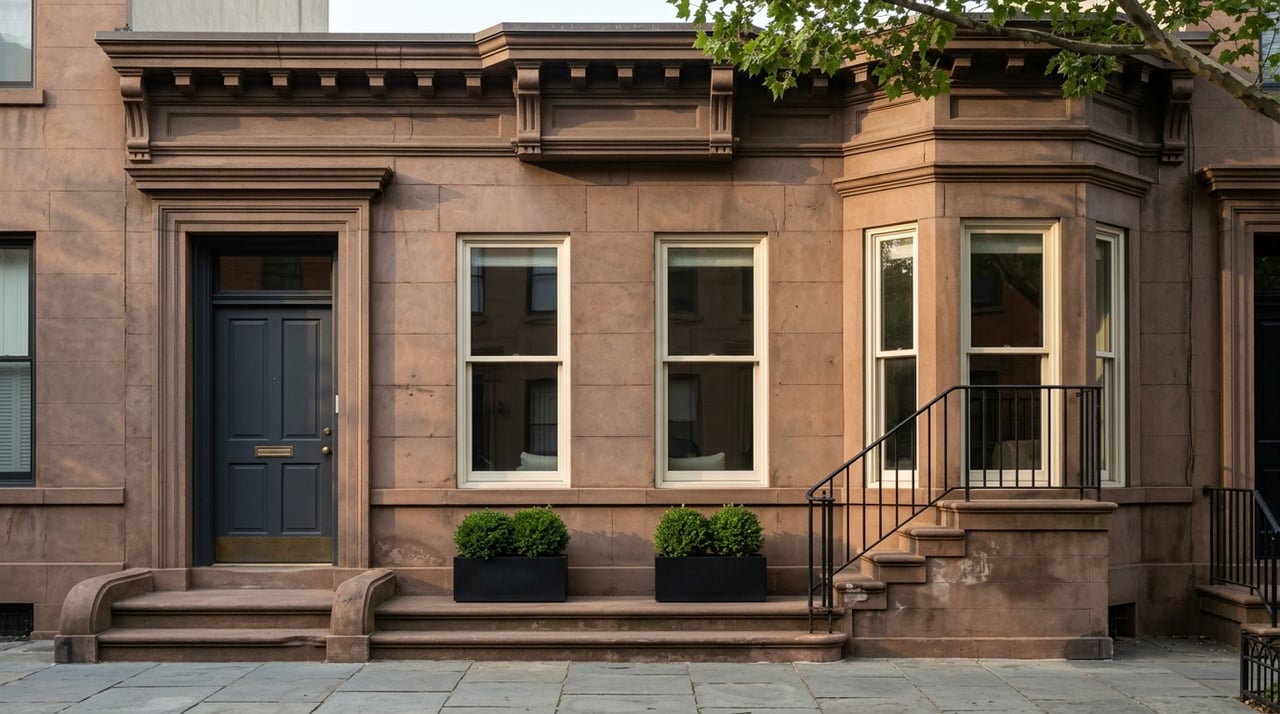
Ever look at a Brooklyn Heights listing and wonder whether the asking price reflects true value or just a confident seller? You are not alone. In a neighborhood where listing prices can range from a $565,000 studio to a $7.895 million condo, reading the number correctly takes more than glancing at the headline. This guide will help you decode what a Brooklyn Heights ask is really telling you so you can compare homes more intelligently and make sharper decisions. Let’s dive in.
Why Brooklyn Heights prices need context
Brooklyn Heights sits near the top of brownstone Brooklyn when it comes to asking prices. Realtor.com reported a median listing price of $1.9 million in May 2026, while StreetEasy showed a median sale price of $1.3 million. Those figures are useful benchmarks, but they come from different datasets and time periods, so they work best as directional signals, not one-to-one valuation tools.
The neighborhood’s pricing also reflects something more than simple square footage. StreetEasy describes Brooklyn Heights as one of Brooklyn’s most upscale and expensive neighborhoods, and the NYC Landmarks Preservation Commission notes the area’s special historical and aesthetic value. In plain terms, buyers are often paying for location, architecture, and scarcity at the same time.
What an asking price usually signals
In Brooklyn Heights, the ask often communicates three things at once. It reflects the seller’s expectations, the home’s condition, and how much competition the seller believes exists for that specific type of property. That is why two homes with similar sizes can still have very different price tags.
A listing price is not just a number. It is also positioning. In a market where homes were selling at roughly asking on average and inventory rose 38.27% month over month in May 2026, pricing still needs discipline.
Start with product type
One of the biggest mistakes buyers make is treating Brooklyn Heights like one single market. It is not. A pre-war co-op, a brownstone condo, a townhouse-style co-op, and a luxury waterfront condo may share the same neighborhood name, but they do not trade on the same pricing logic.
That matters because the neighborhood average can hide major differences. StreetEasy’s current sales slate spans from a $565,000 studio to a $7.895 million five-bedroom condo. If you do not compare like with like, the average will not help you much.
Co-ops and condos price differently
Take 132 Remsen Street #6 and 111 Hicks Street #23H as examples. The Remsen Street home is a condo listed at $994,500 in estate condition, while the Hicks Street home is an extensively renovated one-bedroom co-op listed at $785,000. If you looked only at asking price, you might assume the co-op is the better value, but the ownership type, condition, and monthly costs tell a more complete story.
The same goes at the upper end. A renovated townhouse co-op like 89 State Street #1 asks $1.695 million, while Quay Tower #26D asks $2.995 million. Both are premium homes, but one is trading on townhouse character and private outdoor space, while the other layers in waterfront views and full-service condo amenities.
Read condition before you read value
A lower asking price does not always mean a bargain. Sometimes it simply reflects work that still needs to be done.
At 132 Remsen Street #6, the listing price of $994,500 comes with estate condition. StreetEasy describes it as a chance to restore and reimagine the home. For a local buyer, that usually means you are trading renovation effort for address, character, or layout potential.
By contrast, 55 Pineapple Street #4E is a designer-renovated pre-war studio asking $565,000. It is much smaller at 475 square feet, but the updated condition changes the value equation. When locals read these listings, they are not just comparing prices. They are comparing how much work, time, and capital each home may require after closing.
Renovation can support a premium
Renovation level is one of the strongest price filters in Brooklyn Heights. 111 Hicks Street #23H is described as extensively renovated, and 89 State Street #1 is a renovated full-floor corner townhouse co-op with central air, a fireplace, and private outdoor space. Those features can support a stronger ask because they reduce the need for future improvements and increase day-to-day usability.
Historic context matters too. The NYC Landmarks Preservation Commission states that the Brooklyn Heights Historic District has special historical and aesthetic value and warns that incompatible renovations can depress real estate values. That helps explain why well-executed updates in this neighborhood may carry a pricing premium beyond simple cosmetics.
Use price per square foot carefully
Price per square foot is useful, but only as a starting filter. Realtor.com reported a Brooklyn Heights benchmark of $1,508 per square foot in May 2026. That sounds precise, but current listings show how wide the real spread can be.
For example, 132 Remsen Street #6 is around $1,147 per square foot, 55 Pineapple Street #4E is around $1,189 per square foot, and Quay Tower #26D is listed at $2,011 per square foot. Those numbers reflect more than size. They also reflect views, building style, finish level, and amenity package.
What price per square foot misses
Price per square foot does not fully capture private outdoor space, full-service staffing, landmark charm, or waterfront exposure. It also does not capture how a buyer may value move-in-ready condition versus a renovation opportunity. That is why a simple dollar-per-foot comparison can mislead you if you stop there.
A better approach is to use price per square foot to narrow a search, then test whether the premium makes sense for that product type. In Brooklyn Heights, the question is rarely just, “How big is it?” The better question is, “What comes with the space?”
Always factor in monthly carry
In New York City, the asking price is only part of the affordability picture. Monthly carrying costs can change your real budget more than the sticker price itself.
Current examples in Brooklyn Heights show a wide range. 55 Pineapple Street #4E has $690 per month in maintenance. 111 Hicks Street #23H has $2,256 per month in maintenance. 132 Remsen Street #6 has $688 in common charges plus $987 in monthly taxes, while Quay Tower #26D has $2,103 in common charges plus $2,614 in monthly taxes on leased land.
Why carry changes the math
Two homes can have similar asking prices but very different ownership costs. That is especially important when you are comparing co-ops and condos. A lower purchase price with high monthly maintenance may not be cheaper over time than a higher-priced home with more manageable recurring costs.
This is one of the most local ways to read a listing price. Buyers who focus only on the headline number can miss the bigger financial picture. Buyers who evaluate the all-in monthly cost tend to compare homes more accurately.
Let days on market add signal
Days on market can tell you something, but not everything. Realtor.com reported a 33-day median days on market for Brooklyn Heights in May 2026, while StreetEasy showed 58 days. Since the sources use different methodologies, the exact number matters less than the general range.
If a listing has been sitting well beyond those medians, it may be meeting resistance from buyers. It may also belong to a narrower niche, which can naturally take longer to sell. On the other hand, a fresh listing with no price reduction can still be aggressively priced if the product is strong and the seller expects demand.
Compare Brooklyn Heights to nearby areas
If you are trying to judge whether an ask feels high, nearby neighborhoods can offer context. Realtor.com places DUMBO at a median listing price of $2.125 million, Cobble Hill at $1.895 million, Boerum Hill at $1.65 million, Fort Greene at $1.287 million, and Vinegar Hill at $1.2 million. That puts Brooklyn Heights near the top of the local price ladder, with DUMBO usually higher and Cobble Hill very close.
That comparison is helpful, but it should not replace product-specific comps inside Brooklyn Heights itself. A waterfront condo in one area and a pre-war co-op in another may appeal to different buyers and command different pricing for good reason.
A simple framework for reading a listing
If you want to read Brooklyn Heights listing prices more like a local, use this quick checklist:
- Match the product type before comparing price
- Check condition and estimate post-closing work
- Review price per square foot as a filter, not a final answer
- Add monthly carry to understand real affordability
- Note amenities and views that may justify a premium
- Use days on market as a clue, not a verdict
- Compare against similar nearby listings, not just the neighborhood median
The local takeaway
In Brooklyn Heights, the asking price is rarely just about size or address. It usually bundles together condition, building type, services, scarcity, and carrying cost. That is why the same neighborhood can contain an entry-level studio, an estate-condition brownstone condo, a renovated townhouse-style co-op, and a luxury waterfront condo that all price on different tracks.
If you approach the market with that framework, you will be much better equipped to spot when a listing is fairly positioned, when it is ambitious, and when it deserves a closer look. If you want help analyzing Brooklyn Heights comps, monthly carry, or how a specific listing stacks up against the market, Jarrod Duncan can help you evaluate the numbers with clarity.
FAQs
How should you compare Brooklyn Heights co-ops and condos?
- Compare homes by product type first, then review condition, amenities, and monthly carrying costs before deciding whether the asking prices line up.
What does price per square foot mean in Brooklyn Heights?
- It is a helpful screening tool, but it does not fully capture views, outdoor space, renovation quality, building services, or historic character.
Why can a lower Brooklyn Heights listing price still be expensive?
- A lower ask may reflect estate condition or needed renovations, which can add significant cost and effort after closing.
How important are monthly carrying costs in Brooklyn Heights?
- They are very important because maintenance, common charges, and taxes can materially change your real monthly budget.
What does days on market tell you about a Brooklyn Heights listing?
- It can suggest whether buyers are responding to the price, but it should be read as one signal alongside condition, product type, and overall market context.