If you are thinking about living in Brooklyn Heights, you are probably asking two big questions: what does daily life actually feel like, and what kind of homes can you realistically find there? This neighborhood has a reputation for charm, history, and convenience, but it also has a very specific housing mix and rhythm that can shape whether it fits your goals. In this guide, you will get a clear look at how Brooklyn Heights functions day to day, what its housing stock looks like, and what to keep in mind as a buyer or renter. Let’s dive in.
Brooklyn Heights at a glance
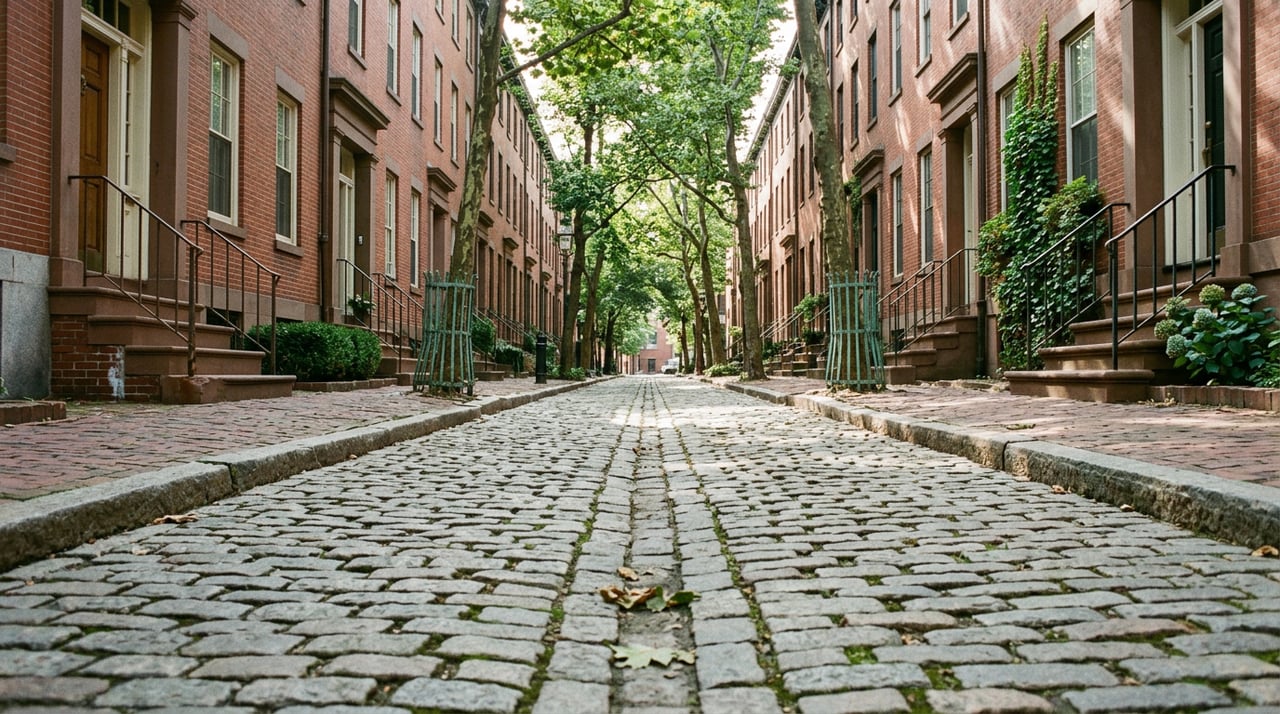
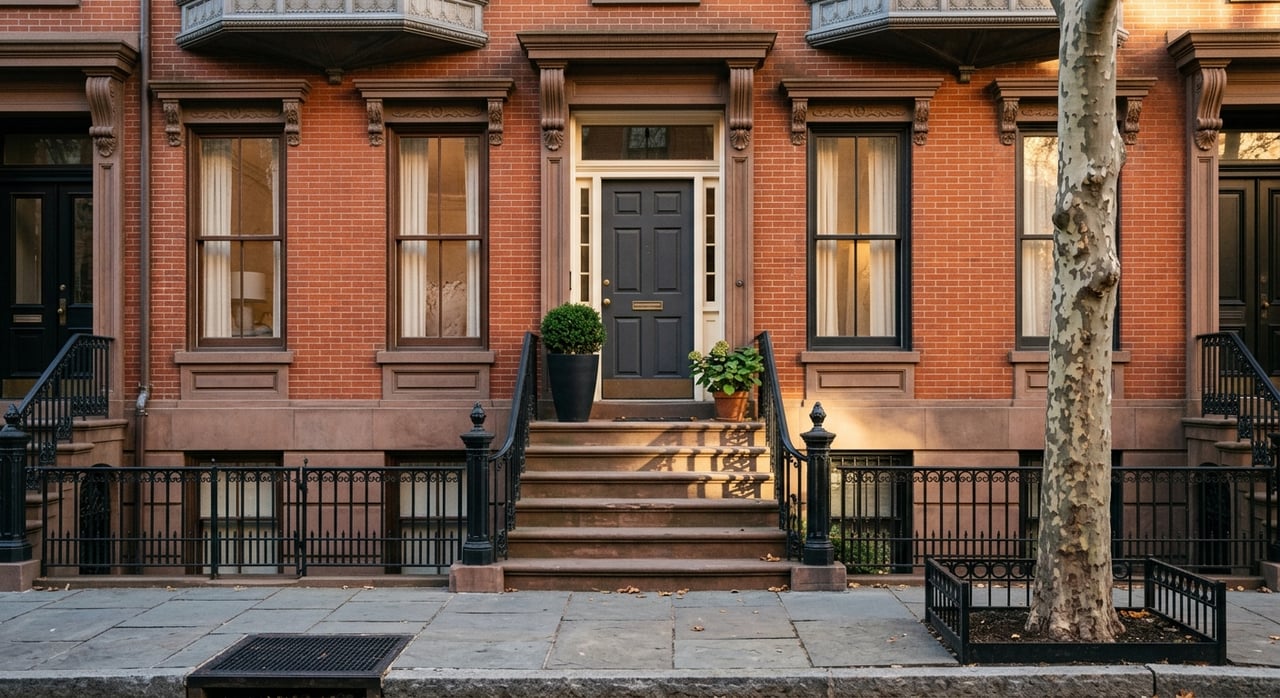
Brooklyn Heights is one of Brooklyn’s oldest intact residential districts. According to the New York City Landmarks Preservation Commission, the neighborhood developed as a residential area in the early 19th century and still reflects that history through its tree-lined streets, brick and brownstone houses, and stone sidewalks.
That history is not just background detail. It shapes the way the neighborhood feels now. Even with change around its edges, Brooklyn Heights has remained strongly residential, with most business activity concentrated around Fulton Street and Montague Street.
What daily life feels like
Daily life in Brooklyn Heights tends to feel walkable, local, and structured around a few well-used corridors rather than one large commercial district. You can handle many errands on foot, whether that means grabbing coffee, picking up groceries, meeting someone for lunch, or heading to the waterfront for a walk.
The neighborhood’s best-known public space is the Brooklyn Heights Promenade. City materials describe it as an overlook along the East River, south of the Brooklyn Bridge, with a walkway, benches, and a small playground. Because it sits above the BQE and waterfront uses below, it gives the neighborhood a distinctive edge where residential streets meet open views.
That access to outdoor space is a big part of the area’s appeal. For many residents, the Promenade is part of everyday life rather than an occasional destination. It can be a place for a morning walk, a quick break in the afternoon, or an evening reset at the end of the day.
Where the neighborhood gathers
Brooklyn Heights has a handful of commercial corridors that anchor daily routines. Montague Street, Court Street, Atlantic Avenue, and a small stretch of Henry Street are the main places where retail and services cluster.
This setup gives the neighborhood a practical rhythm. Instead of feeling spread out, many of the basics are concentrated in a few familiar areas. That can make the neighborhood especially appealing if you value convenience and a more pedestrian routine.
A good example is the Brooklyn Borough Hall Greenmarket at Court and Montague Streets. GrowNYC notes that it has served Brooklyn Heights and Downtown Brooklyn since 1983 and operates year-round on Tuesdays and Saturdays. Tuesday tends to match the weekday rush, while Saturday is more of a relaxed stock-up day.
Montague Street also adds to that street-level activity. NYC DOT lists it as a Sunday Open Street from May 3 through October 25, 2026, which supports a more people-focused street environment during that period.
Getting around Brooklyn Heights
One of Brooklyn Heights’ biggest strengths is transit access. For a neighborhood known for low-rise residential blocks and historic character, it has unusually strong subway coverage.
Nearby stations include Clark Street on the 2 and 3, Borough Hall on the 2, 3, 4, and 5, Court Street on the R with transfers to the 2, 3, 4, and 5, High Street on the A, and Jay Street-MetroTech on the A, C, F, and R. The MTA identifies Jay Street-MetroTech as ADA accessible.
Clark Street is also notable because it is a deep cavern station served by elevators. The MTA states that the station reopened after all three elevators were replaced in 2022.
If you prefer a car-light lifestyle, Brooklyn Heights offers more than subway access. The Brooklyn Bridge connects Lower Manhattan and Brooklyn Heights and includes both a pedestrian promenade and a protected bike path. In 2024, NYC DOT reported an average daily count of 28,845 pedestrians and 5,504 cyclists crossing the bridge.
There is also nearby ferry access at Atlantic Ave and Brooklyn Bridge Park Pier 6 on the South Brooklyn NYC Ferry route. The landing is connected to buses, subways, and Citi Bike, which adds another layer of flexibility for getting around.
Housing styles in Brooklyn Heights
Brooklyn Heights has one of the clearest architectural identities in New York City. The Landmarks Preservation Commission describes it as a residential neighborhood that retains much of the atmosphere of a 19th-century urban community.
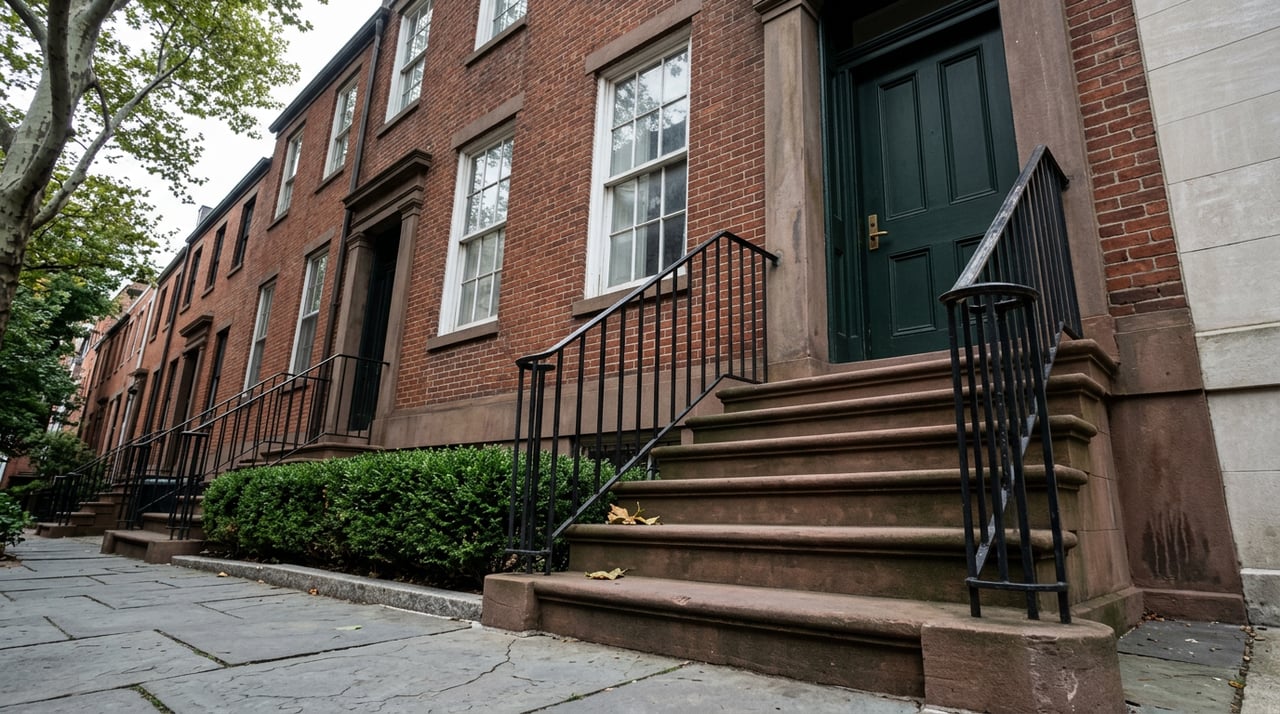
Its historic housing stock includes Federal, Greek Revival, Gothic Revival, and Italianate buildings, as well as carriage houses and mews. The core streets are known for rows of brick and brownstone houses, with larger homes on Pierrepont, Remsen, and Columbia Heights and smaller houses on streets like Willow, Hicks, Joralemon, Orange, Pineapple, and Clark.
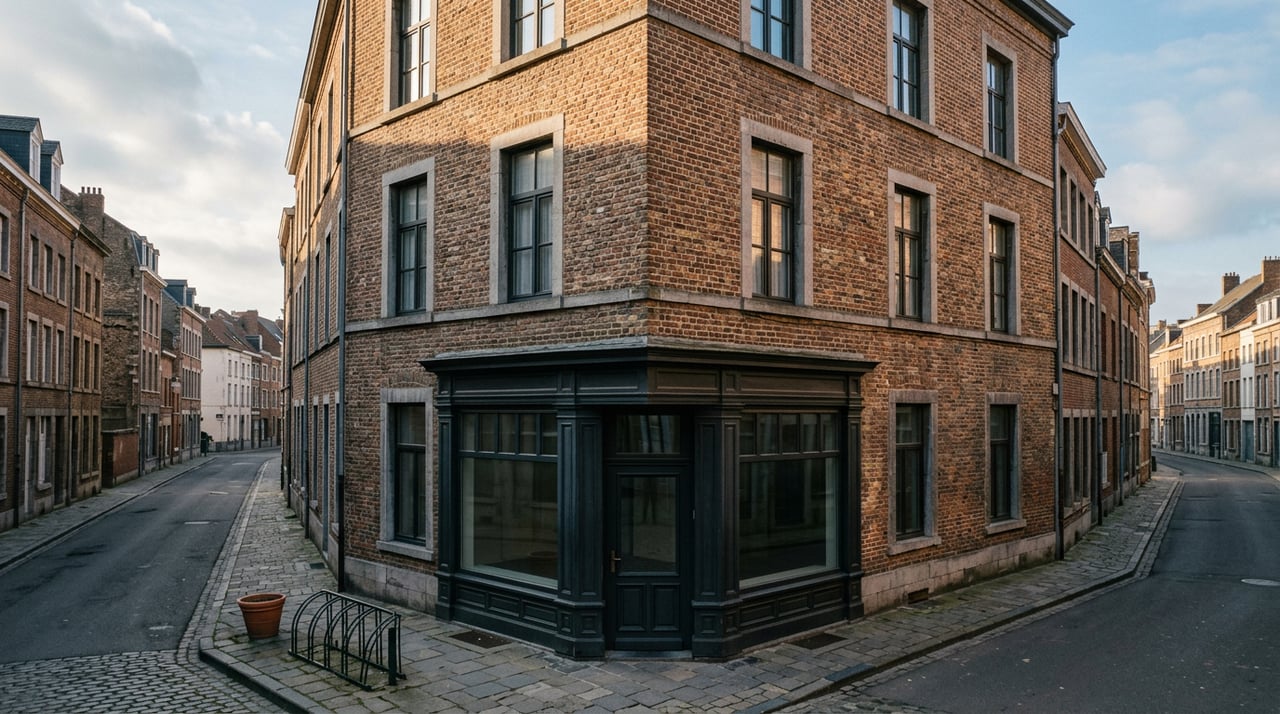
In practical terms, that means you are not looking at a neighborhood defined by large-scale new construction. You are looking at a place where historic buildings shape the streetscape and continue to define much of the housing inventory.
What types of homes you can find
The modern housing market in Brooklyn Heights sits on top of that historic fabric rather than replacing it. The New York City Department of Finance 2025-26 rolling sales file shows a mix that includes co-op elevator apartments, condo elevator apartments, and rental walkup apartment buildings.
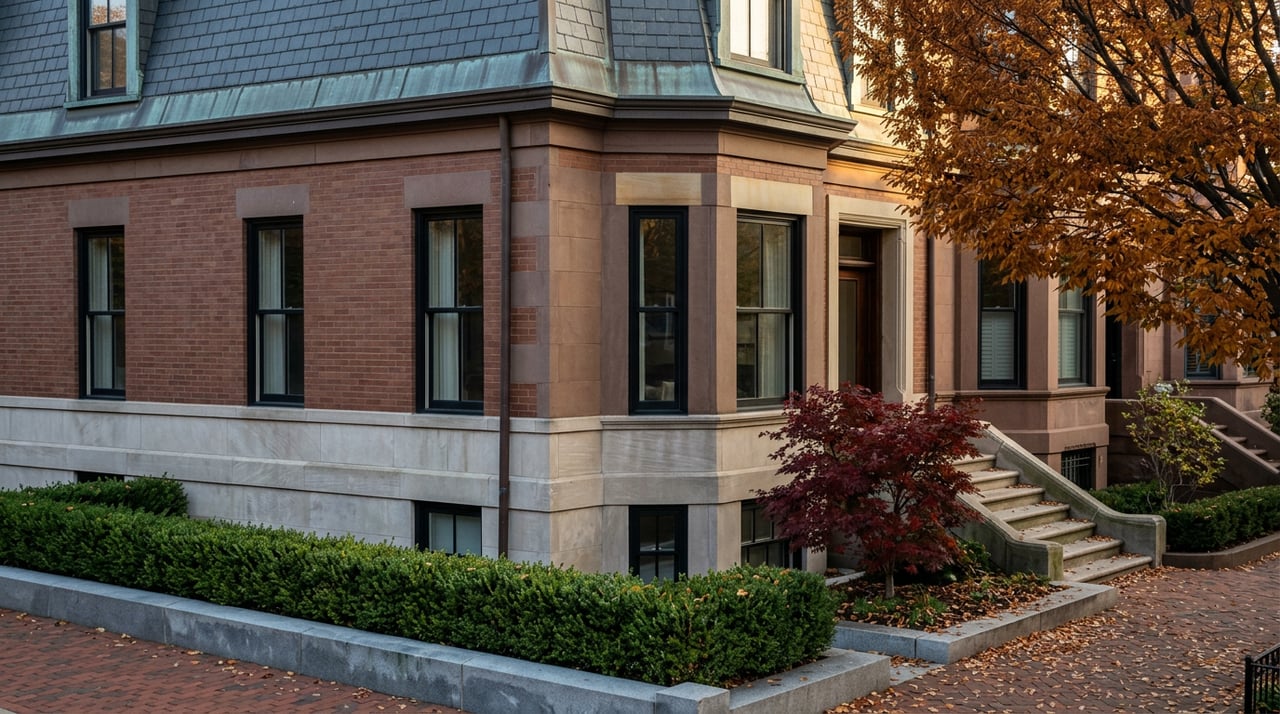
Examples appear across streets such as Montague, Pierrepont, Remsen, Henry, Furman, College Place, Poplar, Clinton, Joralemon, Columbia Heights, and Columbia Street. Based on that sales roll and the neighborhood’s built form, the housing mix is best understood as prewar co-ops and brownstone or rowhouse buildings on interior blocks, with a smaller but meaningful condo segment, especially in newer or waterfront-adjacent buildings.
For buyers, that matters because your search experience may feel very different from one block to the next. A co-op search often comes with different financial and application considerations than a condo search, while townhouse-adjacent homes can offer a different ownership profile again. In a neighborhood like Brooklyn Heights, understanding those tradeoffs early can help you search more efficiently.
What the market mix means for buyers
If you are buying in Brooklyn Heights, the neighborhood may be especially appealing if you value architectural character, established streetscapes, and a strong residential identity. It can also be a good fit if fast transit access matters to you but you do not want to give up a more classic low-rise neighborhood feel.
At the same time, it helps to be realistic about what the inventory tends to offer. Brooklyn Heights is likely a better match if you are open to established housing stock rather than expecting a large amount of brand-new development. That conclusion follows from the neighborhood’s historic preservation framework, low-rise pattern, and the limited but present condo inventory reflected in the sales data.
This is where a finance-minded approach can help. In a market with multiple housing formats, it is worth comparing not just appearance and location, but also pricing logic, ownership structure, and how each option fits your longer-term plans.
A quick look at market context
For a current snapshot, Redfin reported a March 2026 median sale price of $2.685 million in Brooklyn Heights. It also reported a median of 56 days on market and a median sale price per square foot of $1.51K.
Realtor.com described Brooklyn Heights as a balanced market in March 2026. For buyers and sellers alike, that suggests a market that may offer negotiation and planning opportunities, but still calls for careful pricing and property-specific analysis.
Is Brooklyn Heights the right fit?
Brooklyn Heights tends to work well if you want a neighborhood that feels historic, walkable, and clearly residential. It also stands out for people who value being close to the waterfront, having several transit options, and living in an area where architecture shapes everyday experience.
It may be less aligned with your goals if your top priority is a heavy pipeline of new development or a nightlife-centered environment. The neighborhood’s low-rise historic character is part of what makes it attractive, but it also narrows the type of inventory you are likely to see.
For many buyers and renters, that tradeoff is exactly the point. Brooklyn Heights offers a distinct version of New York living, where local routines, classic housing stock, and strong connectivity all work together.
If you are weighing Brooklyn Heights against other Brooklyn or Manhattan neighborhoods, the smartest next step is to compare not just price, but also building type, daily routine, and long-term fit. If you want clear, neighborhood-specific guidance grounded in both lifestyle and numbers, connect with Jarrod Duncan.
FAQs
What is daily life like in Brooklyn Heights?
- Daily life in Brooklyn Heights is typically walkable and residential, with routines centered around the Promenade, local retail corridors like Montague and Court Streets, and the Brooklyn Borough Hall Greenmarket.
What types of homes are common in Brooklyn Heights?
- Brooklyn Heights is known for historic row houses, brownstones, prewar co-ops, condo apartments, and some rental walkup buildings, with the historic housing stock defining much of the neighborhood’s identity.
Is transit convenient in Brooklyn Heights?
- Yes, Brooklyn Heights has access to multiple subway lines, the Brooklyn Bridge pedestrian and bike connection, and nearby ferry service at Atlantic Ave and Brooklyn Bridge Park Pier 6.
Is Brooklyn Heights mostly historic housing?
- Yes, the neighborhood’s defining character comes from its 19th-century residential fabric, including brick and brownstone houses and other historic building styles identified by the Landmarks Preservation Commission.
Is Brooklyn Heights a good fit if you want newer condos?
- Brooklyn Heights does have some condo inventory, especially in newer or waterfront-adjacent buildings, but the neighborhood generally offers more established housing stock than large-scale new development.
What is the Brooklyn Heights housing market like?
- In March 2026, Redfin reported a median sale price of $2.685 million, 56 median days on market, and a median sale price per square foot of $1.51K, while Realtor.com described the area as a balanced market.