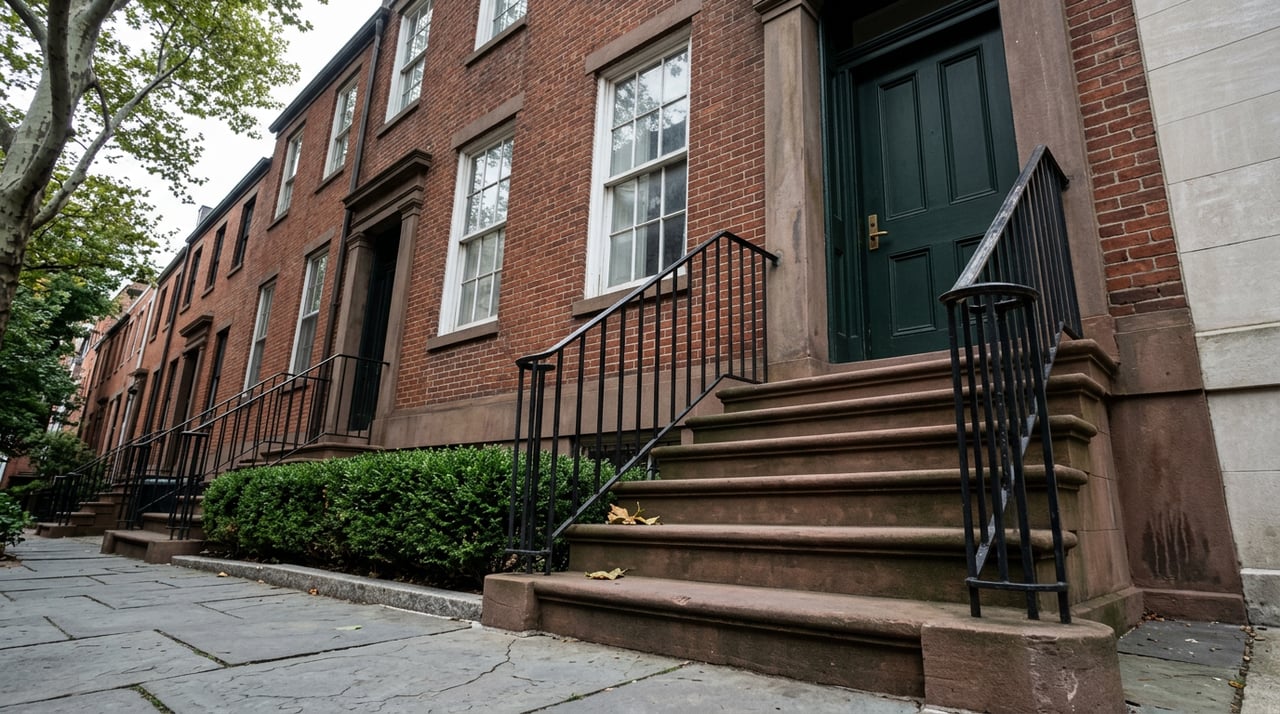
For years, the single most honest sentence a Gramercy Park seller could hear from their broker was some version of "we don't know when the board will decide." A contract could sit for six weeks or six months. Mortgage rate locks would expire. Carrying costs would compound. The seller absorbed the drift because there was no other option.
That sentence stops being accurate on July 28, 2026. What replaces it is not "the board will move faster." It is something more useful, and more particular to how Gramercy transacts.
The Shift That Actually Matters
The Cooperative Application Timeline Law, formally Local Law 2026/058, was enacted after the City Council overrode a mayoral veto on January 29, 2026. It applies to every purchase application submitted on or after July 28, 2026, in any co-op with ten or more residential units. Condos, HDFCs, Mitchell-Lama buildings, and co-ops with fewer than ten units are outside its reach.
That last carve-out matters more in Gramercy than almost anywhere else in Manhattan. StreetEasy counts roughly 84 co-op and condop buildings in the neighborhood, most of them mid-century full-service prewars with 150 to 340 units. Every one of them is squarely inside the new statute. The most famous exception is 34 Gramercy Park East, the 1883 building often described as the city's oldest co-op, which contains nine units and therefore sits outside the law entirely. If your building has ten or more apartments, the rules below now apply to your buyer's application. If it doesn't, the old rules of unlimited discretion still do.
Here is the mechanic, in the order it will affect your closing:
- 15 days to acknowledge. Once the co-op receives your buyer's package, it has 15 days to send written notice, by both email and registered mail, either confirming the package is complete or specifying exactly what is missing. Miss that window, and the package is deemed complete by operation of law.
- 45 days to decide. From the day the package is complete, the board has 45 days to notify the buyer of approval, conditional approval, or denial. The board is not required to state a reason for denying.
- One 14-day extension. The board may take a single unilateral 14-day extension if it notifies the buyer before the original deadline runs. Further time requires the buyer's written consent. A second 14-day extension is available only if the board requests supplemental information during review.
- Enforcement through HPD. Missed deadlines do not produce automatic approval. They produce a complaint filed with the Department of Housing Preservation and Development, adjudicated at OATH, with penalties of $1,000 for a first violation, $1,500 for a second, and $2,000 thereafter.
The thesis of this post is that none of those items is the variable Gramercy sellers should actually be watching. The variable is the summer recess.
Why The Recess Clause Is The Sentence In Your Contract
The statute allows a board to pause both the 15-day and 45-day clocks during July and August, but only if it has adopted a written summer recess policy in advance, maintained in the building's official records and disclosed to applicants.
In a normal Manhattan neighborhood, that provision would be a footnote. In Gramercy Park, where the buildings are prewar co-ops with long-tenured, volunteer boards that historically do go dark for the summer, it is the ballgame. A seller who signs a contract in early July with a buyer who submits a package in mid-July can, in a building with a valid recess notice on file, watch the clock legally stop until September. A seller in an otherwise identical building without a written recess notice will see the buyer's package deemed complete on Day 15 and a decision required by roughly Day 60.
Two buyers, two buildings a block apart, same asking price, same finishes. One closes in September. One closes in November. The delta is a piece of paper the board either adopted before July 28 or didn't.
Before you accept an offer, ask your managing agent, in writing, for a copy of the building's summer recess policy. If one exists, read it. If one does not, that itself is worth pricing into your listing timeline. This question was not on any seller's due-diligence list before this year. It should be at the top of it now.
What The New Timeline Does For Your Carrying Cost Math
Gramercy Park's own market data is what makes this planning exercise concrete. Redfin recorded a median sale price of $950,000 in February 2026, with average days on market lengthening to 87 from 67 a year earlier. PropertyShark's March 2026 figures showed a median co-op sale price near $712,000 against a median condo price of $1.6 million, a spread that reflects the neighborhood's dominant prewar co-op stock.
A stretched DOM is not, in itself, bad news for a seller. It becomes bad news when it stacks on top of an open-ended board review. Under the pre-July regime, a seller pricing a $1.2 million co-op could reasonably assume six to nine months of carrying costs from listing to close, with the second half of that window essentially undefined. Under the new regime, the board portion of the timeline is bounded at roughly 60 days once the buyer's package is complete, plus any tolling the recess policy permits. That is the first time a Gramercy seller can build a realistic carrying-cost projection with a hard outer edge on the board window.
On the cost side, none of the closing-cost math has changed. A Manhattan co-op seller should still budget 8 to 10 percent of the sale price for total transaction costs, structured roughly as follows:
- Broker commission: typically 4 to 6 percent, with 5 percent common on luxury co-ops
- Combined NYC and NYS transfer taxes: 1.4 to 2.075 percent, with the NYC RPTT at 1.425 percent above $500,000 and the NYS rate at 0.4 percent below $3 million
- Flip tax: Manhattan co-ops commonly charge 1 to 3 percent, set by the proprietary lease or bylaws, and almost always paid by the seller
- Seller attorney: $3,000 to $5,000 for a standard sale
- Managing agent and stock transfer items: $500 to $1,500 in most buildings
The number that varies most, building to building, is the flip tax. In Gramercy, the structure can be a percentage of price, a percentage of profit, a per-share amount, a flat fee, or a hybrid. Get the formula and a sample payoff calculation in writing from the managing agent before you sign a contract, not after. The rate itself is not negotiable. The line item it produces on your closing statement is not small.
The Package Quality Question
There is a subtle incentive shift in the 15-day rule that most sellers have not yet processed. Under the old system, a sloppy buyer package hurt the buyer. Under the new system, a sloppy package still hurts the buyer, but a slow board hurts the board.
The result for sellers is that buyer package quality now matters more, not less. A Gramercy board that misses the 15-day acknowledgment window has effectively started its own 45-day clock on a package it has not yet vetted. Boards that are well-run will not miss that window. Boards that are less well-run may respond by tightening their initial completeness reviews, which means the smallest gap in a buyer's tax returns, reference letters, or liquidity documentation is now more likely to be caught on Day 14 and returned for revision.
Gramercy boards have long been on the conservative end of Manhattan co-op practice. Down payment expectations of 25 to 30 percent are common, with post-closing liquidity often required at one to two years of carrying costs. Those standards are not going to loosen because of a timeline law. They are, if anything, going to be enforced with more procedural rigor. A financially strong buyer with a clean, complete package is now worth more to a seller than a slightly higher offer from a buyer whose file has soft spots.
What The Law Does Not Do
A few clarifications worth reading before you build any of this into a listing strategy.
The law does not grant deemed approval on the back end. If a board misses the 45-day deadline, the buyer does not automatically become a shareholder. The remedy is an HPD complaint and a fine, not a transfer of shares.
The law does not require boards to disclose the reasons for a denial. A separate proposed bill, Intro 407-A, would require written reasons within five days, but it has not been enacted. Approval, conditional approval, or denial remain the three possible answers, and only the first two come with any explanation.
The law does not override the Fair Chance for Housing Act, effective January 1, 2025, which continues to restrict criminal background checks until a buyer is otherwise approved or conditionally approved. That is one reason "conditional approval" is likely to appear more often in Gramercy going forward, not less.
And the law does not touch condominiums at all. If you own in one of Gramercy's smaller condo buildings, the transaction mechanics that apply to your sale are unchanged.
FAQ
Does the law apply if my building has exactly ten units? Yes. The threshold is ten or more residential units. Buildings with nine or fewer are exempt, which in Gramercy most notably includes 34 Gramercy Park East.
If my building has a written summer recess policy, when does the clock restart? The recess tolls both the 15-day and 45-day clocks during July and August only. The clock resumes on September 1 for any package that was pending or received during the recess.
Should I list before July 28 to lock in the old rules, or after? The law applies to purchase applications submitted on or after July 28, not to contracts signed before that date. In practice, most contracts signed in July will produce applications submitted after the effective date, which means the new timelines will govern regardless. Listing decisions should be driven by pricing, comparable inventory, and your building's specific summer recess posture, not by a race against the statute.
Does the flip tax change under this law? No. Flip tax structures are set by each building's proprietary lease and bylaws. Get the exact formula in writing from your managing agent before you go into contract.
If you are thinking about listing a Gramercy Park co-op in the second half of 2026, the timeline law changes the shape of your transaction more than the shape of your price. The right preparation begins with three documents from your managing agent: the building's written transfer requirements, its summer recess policy if one exists, and the exact flip tax calculation for your unit. Jarrod Duncan works with Gramercy and Manhattan sellers on exactly this kind of pre-listing groundwork, translating building-specific rules into a pricing and timing strategy that holds up at closing. Let's Connect.