The first Gramercy buyers to sign contracts in July are the first to see Local Law 97 land on a real board package. The May 1, 2026 penalty date has passed. The 60-day late-filing grace window closed on June 30. If you are reviewing minutes and financials this month for a prewar co-op on 20th Street or Irving Place, the "carbon assessment" line item you are looking at is not theoretical anymore. It is the first quarter of the first year of a compliance regime that will run through 2050.
The thesis: a Gramercy carbon assessment is not a number to negotiate around. It is a lens that makes the building's next ten years of maintenance legible, and buyers who read it correctly can price the 2030 cap into today's offer.
That reframing matters because Gramercy's housing stock is unusually exposed. The neighborhood's prewar co-ops were built for coal, converted to oil, then to gas. The plants running today were mostly installed in the 1960s and 1970s. They are exactly the buildings the law was written to force off fossil fuels.
The line items that tell you what you're bought into
Board minutes are where the LL97 conversation actually happens, and the vocabulary is specific. Look for line items like "Article 320 plan," "decarbonization study," "engineer scope," or "LL97 capital assessment." If those items appear and the board has not voted on funding, you are walking into an open question. If they appear and the board has approved funding, you know what you are buying.
| Language in minutes | What it signals | Follow-up your attorney should ask |
|---|---|---|
| "Article 320 plan" | Building is on the emissions-cap track, not the prescriptive one | Is a Good Faith Effort application filed? What is the modeled 2024 exceedance? |
| "Decarbonization study" | Engineering work commissioned, cost path not chosen | Which firm, what deliverable date, what preliminary capex range? |
| "LL97 capital assessment" | Board has quantified and voted a funding mechanism | Per-share dollar amount, duration, and whether it is one-time or annualized |
| "Article 321 / prescriptive pathway" | Rent-regulated or HDFC status changes the compliance track | Confirm the trigger; the obligations are lighter but not zero |
| Silence on all four | Board is behind, or building is under 25,000 sf | Verify against the DOB Covered Buildings List before signing |
The last row is the one people miss. A package that does not mention LL97 at all is not necessarily a package about a compliant building. It may be a package about a board that has not started the work.
Why Gramercy's prewar stock sits in the crosshairs
The exposure map published by DeFalco Realty this spring is worth reading against the Gramercy footprint. The worst-positioned category in Manhattan is pre-2000 towers with original central plants and full-service staff. Pre-2000 condo towers between Lincoln Center and the Upper East Side, with original gas-fired boilers, central air, full amenity floors, and 24-hour staff, are the worst-positioned. Many run 15 to 25% over their 2024 caps. Replacing a central plant with a heat pump and a building-wide hot-water loop runs $4 to $8 million for a 200-unit tower, which is why some boards are choosing to pay the fine for a year while they line up a real capital plan.
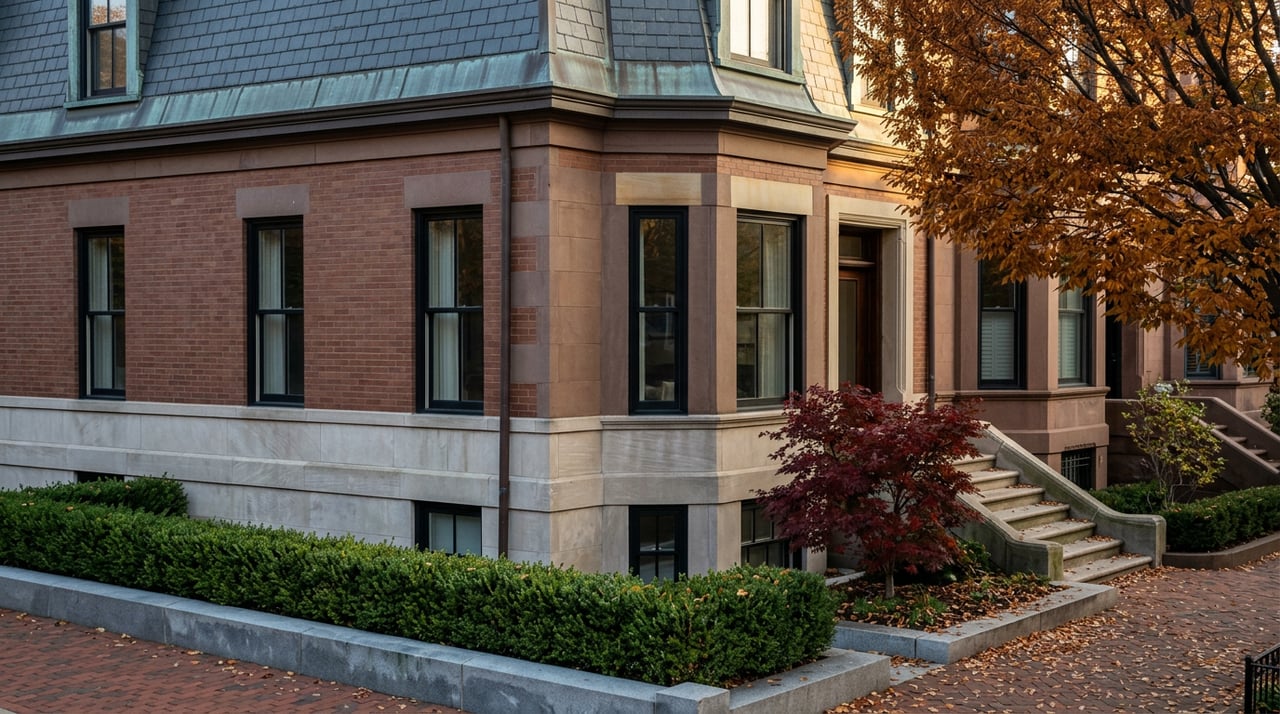
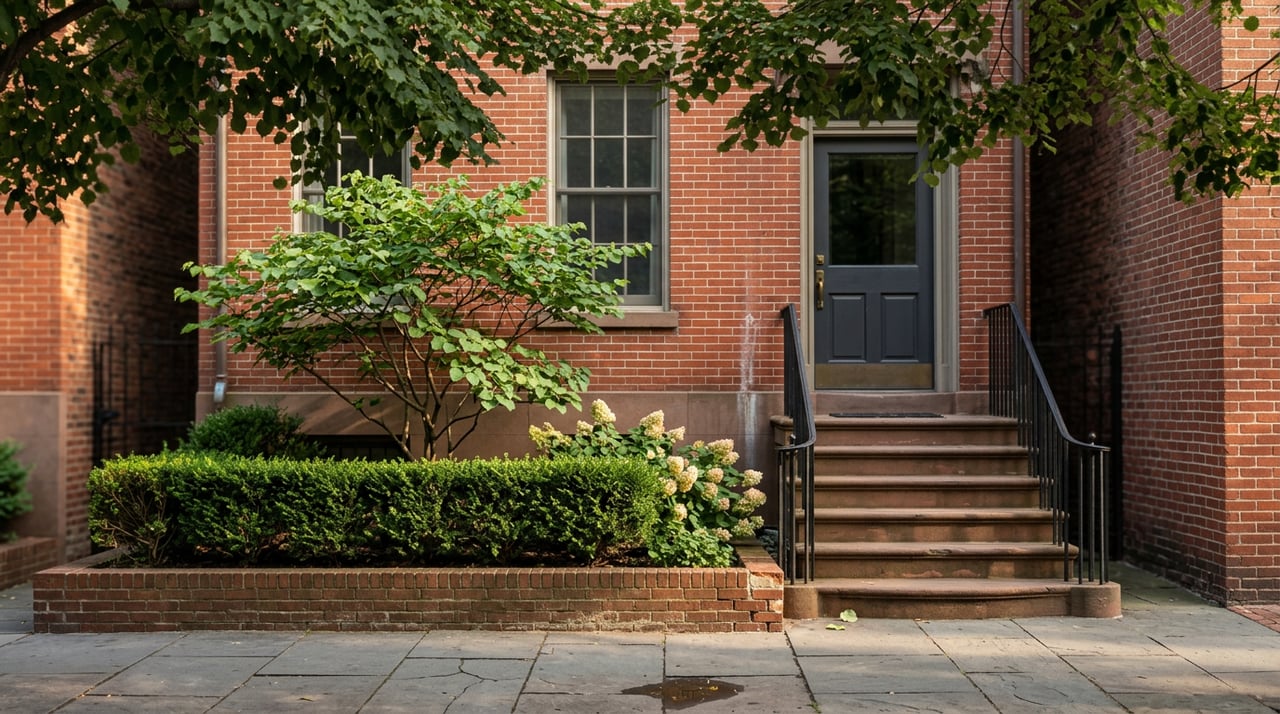
Gramercy's inventory is different in size but similar in profile. Many buildings are 40 to 120 units, brick-and-limestone, with a single gas boiler in the basement and a doorman upstairs. The scale reduces the absolute dollar exposure and increases the per-share pain. On the deep-history end, the neighborhood's oldest intact apartment building at 129 East 17th Street came to market this year at $15 million, which is a useful reminder of how far back the building envelope conversation can go on these blocks.
Where the cost actually lands on your monthly
Boards have three tools, and the choice tells you something about the board itself.
- Pass-through to maintenance or common charges. The fine flows through to your monthly bill. Raise maintenance or common charges across the board (most common; spreads the pain). If you are on the buying side, a 4 to 8% maintenance bump tied to LL97 is the new normal in affected Manhattan and Brooklyn buildings.
- One-time assessment. Used when the board wants to fund the engineering work without permanently raising base maintenance. Cleaner accounting, harder cash-flow moment for shareholders.
- Borrow against the building. For co-ops that means refinancing the underlying mortgage; for condos, a special line of credit. Spreads the cost over years and shifts it into interest expense.
A board that pushes everything into maintenance is telling you it does not want to have the assessment vote. A board that runs an assessment is telling you it wants the study done before it commits to a plant conversion. A board that refinances the underlying is telling you it has a longer view of the balance sheet. None of these are wrong. They are inputs to your bid.
What to ask before you sign
Before your attorney green-lights the contract, work through this list with your broker and the managing agent:
- Is the building on the DOB Covered Buildings List, and what article governs it, 320 or 321?
- Was the 2024 emissions report filed on time, and what did it show against the cap?
- If the building missed the March 31 or May 1, 2026 deadlines, was a Good Faith Effort application filed and accepted?
- Has the board received any Notice of Violation? New York is not a strict caveat-emptor state on this, and nothing in the listing agreement releases a seller from answering direct questions about pending assessments or known violations. If your building has received a Notice of Violation, your broker should know, your buyer's attorney will find it in the lien search, and trying to bury it costs deals.
- Has an engineering study been completed, and does it project compliance through 2029 only, or through 2030 and beyond?
- What is the funding path the board has voted, and what per-share dollar figure does it produce?
That last question is where sophisticated buyers separate from the crowd. 2030-2034 limits are approximately 40% stricter. Buildings barely compliant now will probably exceed 2030 limits. Plan improvements with long-term compliance in mind to avoid needing a second round of upgrades in 2030. A board plan that squeaks the building under the 2024-2029 cap and stops there is a plan that will re-open in 2028 or 2029. You are buying that second assessment too.
Timing math the offer should reflect
Retrofit projects do not move on quarterly calendars. With four years until 2030's significantly tighter emissions caps take effect, many building owners feel they have time. The reality is that major mechanical retrofits, including engineering assessments, equipment procurement, construction coordination, and building system integration, commonly require 18 to 36 months from decision to completion. Permit timelines and potential electrical upgrades in New York City can add further lead time to that estimate.
Translated into buyer math: a Gramercy board that has not yet commissioned a study in July 2026 is unlikely to finish plant work before the 2030 cap tightens. That timing slip has a price. Ask what it is.
Budget scale for whole-building work is not small. High-efficiency boilers, partial or full electrification with air-source or VRF heat pumps, new pumps and controls run a rough 2026 budget of $500,000 to $3,000,000+ depending on plant size and electrification depth. A 60-unit Gramercy co-op splitting a $1.5M plant conversion across shares produces a real per-share number your attorney can plug into carrying-cost projections.
The penalty math, plainly
$268 per metric ton of CO2-equivalent over the building's annual cap, charged every year you exceed it. Late filers also face up to $0.50 per square foot per month, and false statements can carry fines up to $500,000. On a 50,000 sf building, the late-filing fee alone runs $25,000 a month. Those numbers do not compound quickly for a compliant building. They compound very quickly for a building whose board is still "reviewing proposals."
Citywide performance for the first cycle was better than the tabloid coverage suggested. The first round of LL97 annual reports, covering calendar year 2024, were due to the NYC Department of Buildings (DOB) by December 31, 2025. Approximately 93% of covered privately owned properties filed their required compliance reports citywide, with Manhattan leading at 95% and multi-family residential buildings reaching a 94% filing rate. The buildings you should worry about are in the 5% Manhattan minority. Confirm your target is not one of them.
The resale side of the same coin
The disclosure conversation cuts both ways. If you buy a compliant, engineered building today, you are buying a marketable one in 2028 when the next wave of buyers is asking these same questions. If you buy a building that is still "figuring it out," you inherit that conversation as a future seller. Compliant, well-planned buildings are becoming a distinct asset class within Gramercy's prewar inventory. The gap will widen as the 2030 cap approaches.
What LL97 does not do
It does not turn a Gramercy co-op into a bad investment. It does not automatically produce a special assessment. It does not eliminate the pathway advantages of Article 321 buildings, which have a lighter prescriptive track. And it does not remove the negotiating room a well-advised buyer has when the numbers are visible. A building that has done the work of assessment, planning, and funding is worth paying for. A building that has not is worth a different price.
FAQ
Is a "carbon assessment" the same as a special assessment? Not necessarily. It is shorthand for any LL97-related line item, which may be a study fee, a one-time capital assessment, or a maintenance uplift. Ask the managing agent which mechanism the board has voted.
If the building filed on time and is under its cap, is there anything left to diligence? Yes. The 2024-2029 cap is the easy one. Ask what the engineer projects for 2030 and whether the board has budgeted for it.
Does an Article 321 designation mean the building is exempt? No. It means the building follows a prescriptive measures track instead of the emissions cap. For covered affordable housing owners, including co-ops with more than 35% rent-regulated apartments, communities should be working on implementing the required energy conservation measures in their building, which includes things like repairing any heating system leaks, installing individual temperature controls, and upgrading lighting to LEDs. Real work, smaller checks.
Should the price reflect LL97 exposure? Yes, when the exposure is quantified. A modeled per-share assessment or a projected maintenance bump belongs in your carrying-cost math the same way a flip tax or a ground rent reset would. If the exposure is unquantified because the board has not done the work, that itself is information.
If you are writing an offer on a Gramercy Park co-op this summer and want a second read on the board package before you sign, Jarrod Duncan works with buyers on exactly this kind of financial diligence. Let's connect.