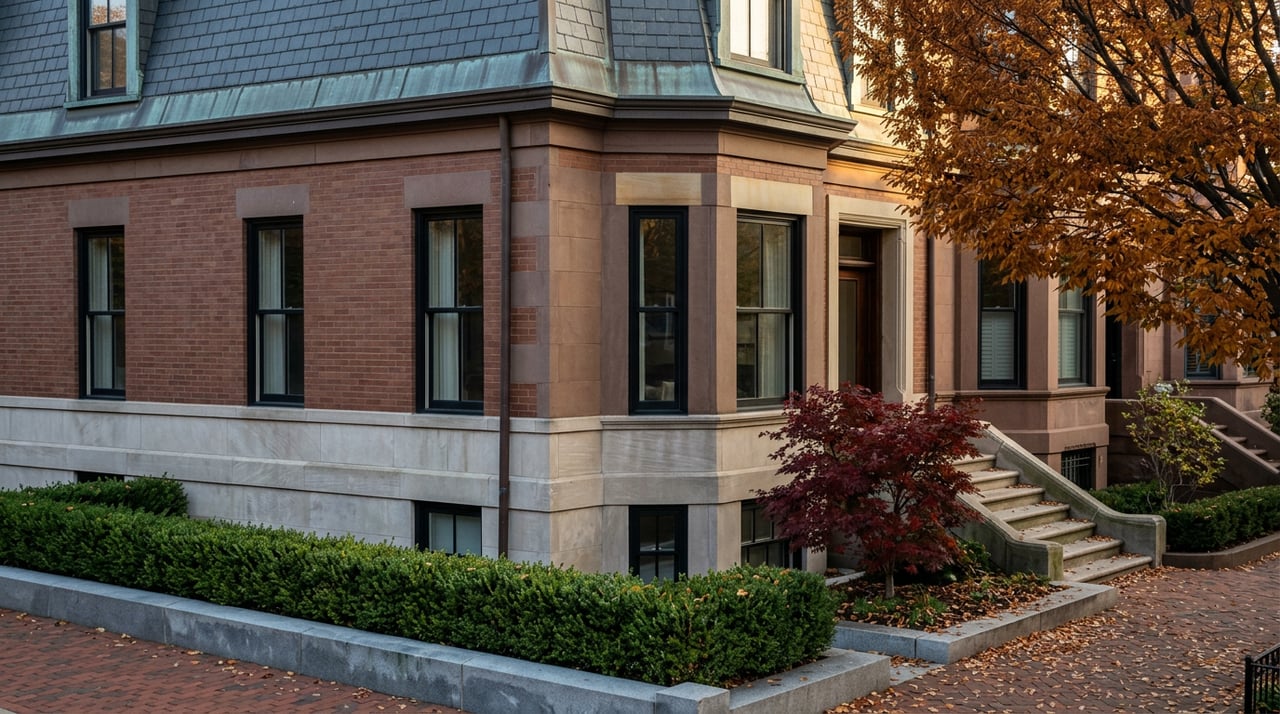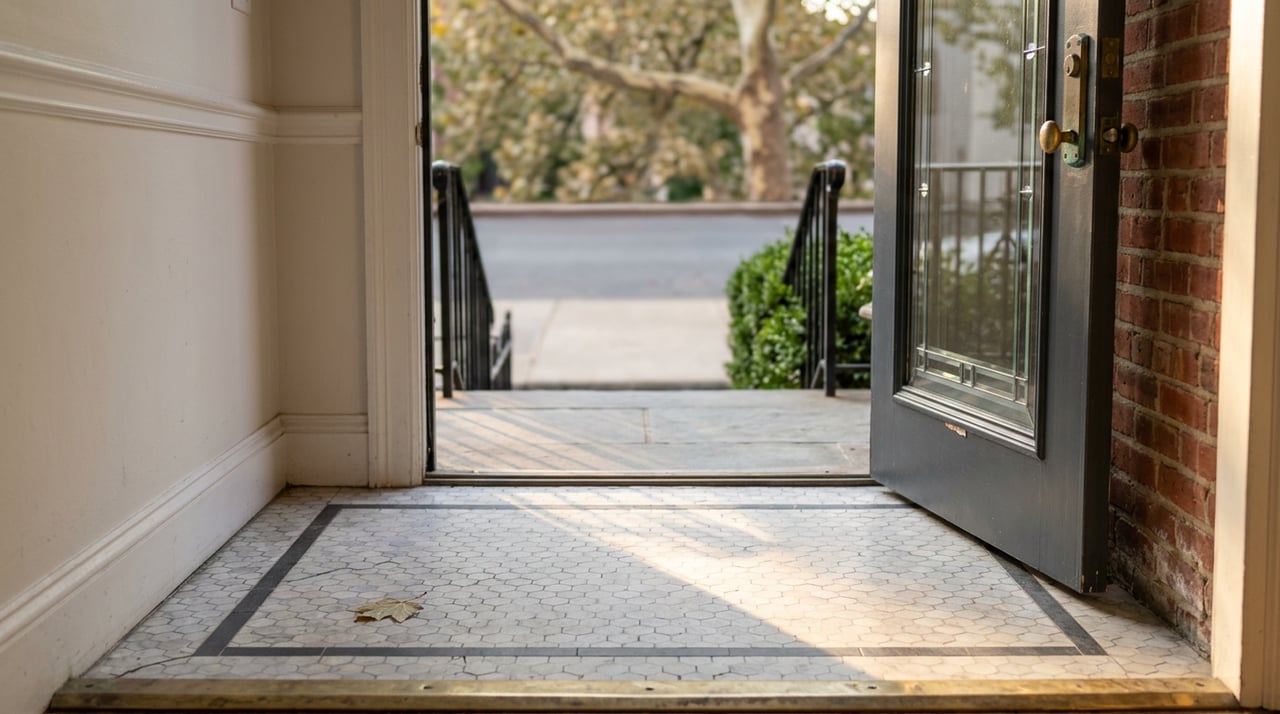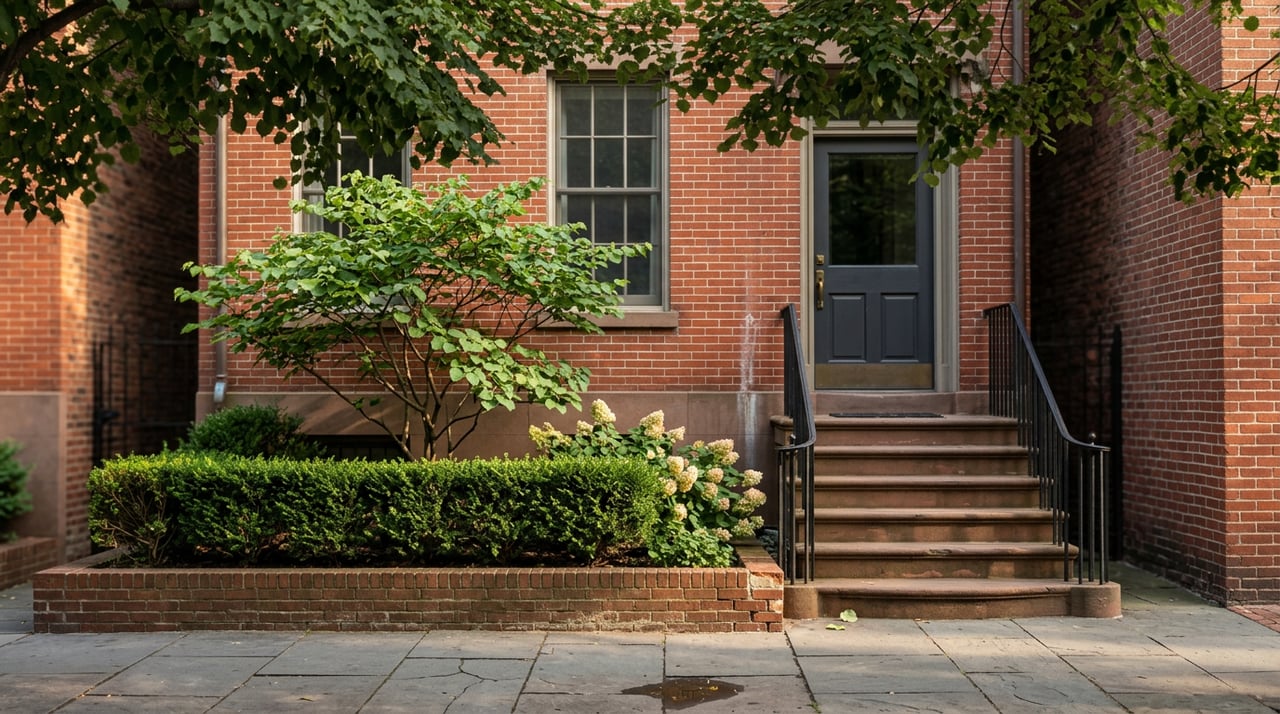
Two prewar co-ops sit across the street from each other on Pierrepont. Same square footage, same era, same LPC district. One quotes maintenance at $1,780 a month. The other quotes $2,420. Both listings describe "well-maintained prewar" and "financially healthy." Neither headline number is wrong. The $640 monthly spread, though, is doing more work than a listing agent will explain in a first showing.
That spread is not noise. In 2026 it is a legible five-year forecast, because three specific cost drivers now move Brooklyn Heights fees in predictable directions, and a building's monthly quote is where those drivers surface first. Reading the spread as a forecast rather than a sticker is how a buyer stops paying for surprises the building already knows are coming.
The three levers that explain almost every Brooklyn Heights spread
Ignore, for a moment, the small stuff. Insurance, elevator service contracts, and staff overtime move the number by tens of dollars. Three levers move it by hundreds.
| Lever | What it is | Where it shows up in the fee |
|---|---|---|
| Local Law 97 | Building-level carbon cap, penalties active in 2026 | 4–8% bump, a "carbon assessment" line, or a special assessment for boiler work |
| Local Law 11 | Mandatory facade inspection cycle, historic-district scope | Multi-year assessment or a step increase after the last cycle |
| Doorman staffing | 32BJ union labor for a full-coverage lobby | A structural $500–$667 per unit per month baked into base maintenance |
Everything else, including the tax-deductible property-tax portion that only co-ops carry, is a rounding adjustment on top of these three. If a buyer understands where a specific building sits on each lever, the spread starts to explain itself.
Local Law 97 stopped being theoretical this spring
The first LL97 compliance year is closed. Covered buildings had to submit their calendar-year 2024 emissions report through the NYC Department of Buildings' BEAM portal by March 31, 2026, certified by a registered design professional. May 1, 2026 was the final penalty assessment date for that first year, and DOB is now issuing Notices of Violation and collecting fines on buildings that ran over their cap.
The penalty math is straightforward and public. A covered building pays $268 per metric ton of CO2 equivalent over its annual limit. A building 150 tons over its cap owes $40,200 a year. A building 500 tons over owes $134,000, and the fine compounds until the building comes into compliance. Administrative failure to file adds a separate $0.50 per square foot per month charge, which on a typical 100,000-square-foot building runs $50,000 a month until the paperwork lands.
Boards have three places to put that cost, and each one shows up differently in a fee quote. A base maintenance raise spreads the pain across every shareholder in every future month. A one-time assessment concentrates it into a defined window, often 12 to 36 months. An underlying mortgage refinance, available to co-ops but not condos, buries the cost in the building's debt service and pushes it forward. Industry practitioners tracking Manhattan and Brooklyn buildings this spring describe a 4–8% maintenance bump tied to LL97 as the new normal in affected buildings.
Brooklyn Heights sits inside that "affected" set almost by definition. Most of the neighborhood's desirable inventory is prewar over 25,000 square feet with oil-fired or gas steam heat, which is the exact profile the emissions cap was written around. If a board has already done a boiler conversion, expect the assessment history to show it and the go-forward fee to be more stable. If a board has done nothing, the fee is a preview, not a settled number. Property managers report boiler conversions running $500,000 to $2 million per building, translating to $5,000 to $25,000 per unit in assessments depending on shares, with envelope work adding another $10,000 to $30,000 per unit where the board decides to tighten windows and insulation instead of paying penalties in perpetuity.
The question a buyer should ask a managing agent is narrow. Has the building filed its BEAM report, and what did the certified engineer's number say relative to the Article 320 cap? A board that can answer that in a sentence has done the work. A board that cannot has passed the risk forward to whoever buys next.
Local Law 11 is the assessment nobody prices in advance
The facade inspection cycle runs every five years for buildings over six stories. Brooklyn Heights inventory is disproportionately in the size and age band that fails the first inspection under the current cycle's tighter probe requirements, and any masonry or cornice work in the LPC historic district has to be reviewed by the Landmarks Preservation Commission before scaffolding goes up. That review adds months to the calendar and cost to the scope.
A useful diligence pass on a Brooklyn Heights building takes about five minutes and looks at four things.
- The date of the last completed FISP filing on the DOB's public record, and whether it closed as "Safe" or "Safe With a Repair and Maintenance Program."
- Any open facade-related permits or LPC applications on the address.
- Board minutes from the last 24 months referencing scaffolding, netting, or a facade engineer.
- The reserve fund balance, benchmarked against the 10 percent of annual income lenders now require condo and co-op budgets to allocate to reserves.
A building heading into a Local Law 11 cycle without a reserve at that threshold will either assess or borrow. Both show up in the fee eventually.
The doorman line item is a structural cost, not a service upgrade
A full-coverage doorman lobby needs four to five 32BJ union employees to staff three shifts plus relief days. For a 100-unit building, that runs roughly $600,000 to $800,000 a year in wages and benefits, which is $500 to $667 per unit per month baked into base maintenance before a single elevator service invoice arrives. The premium is not a management choice a board can undo in a bad year. It is a labor contract.
Two implications follow. A $2.44 per-square-foot Manhattan co-op average, which is the 2026 running number, is the blended figure. Doorman prewars in the neighborhood's most desirable prewar blocks cluster higher, often between $3.50 and $5.00 per square foot in the luxury tier, and non-doorman walkups run $1.00 to $1.40. A Brooklyn Heights buyer choosing between two buildings on the same block is often choosing between $500 a month of package acceptance and lobby coverage on one side and $500 a month of principal payment on the other. The fee spread quantifies that choice cleanly.
The tax-deductible portion changes the real number
Co-op maintenance includes property taxes because the corporation pays them and passes them through. That portion is deductible on federal and state returns, subject to the SALT cap. A Brooklyn Heights co-op quoting $2,000 in monthly maintenance with a 40 percent tax portion lets a shareholder deduct $800 a month. In the 24 percent federal bracket, that is roughly $192 in monthly tax savings, which drops the true carrying cost to about $1,808.
The same buyer comparing that co-op to a condo with $1,100 in common charges and a separate $1,000 monthly property tax bill only deducts the tax bill, not the common charges. The condo's headline fee looks cheaper. The net monthly, once deductibility is applied consistently, often is not. This is a place where a buyer who reads the fee sheet at face value pays for the difference.
A five-minute read of any board package
Before the second showing, ask the managing agent for six items in this order. Every one of them speaks to the three levers above.
- The certified LL97 emissions report submitted to BEAM for calendar year 2024, and any engineer's memo comparing the building to its Article 320 cap through 2030.
- The last two years of board meeting minutes, specifically references to boiler, envelope, or facade work.
- The most recent audited financial statement and the reserve fund balance as a percentage of annual operating budget.
- Any active or pending assessment, its size per share, and its remaining term.
- The underlying mortgage balance, rate, and maturity for a co-op, or the reserve study horizon for a condo.
- The 32BJ staff count and current contract term.
Nothing on that list is unusual to request, and every item narrows what the fee is going to do over the holding period.
FAQ
Are LL97 penalties tax-deductible for shareholders? No. LL97 fines are not deductible as an expense. Capital improvements funded to bring a building into compliance may carry depreciation treatment at the building level, which is a question for a tax advisor rather than a broker.
If a building is compliant for 2024–2029, is it done? Likely not. The 2030–2034 emissions caps are roughly 40 percent stricter. Buildings that just cleared the first cap without meaningful capital work are the ones most likely to face a second round of assessments before the decade closes. A board with a 2030 plan on paper is a materially different risk than a board without one.
Does a special assessment always mean the building is in trouble? No. A defined-term assessment tied to a specific capital project, funded from a documented reserve study, is often a sign of a board doing its job. The warning sign is a recurring assessment with no scope attached, or a base maintenance figure that has not moved while costs around it have.
If you are weighing two Brooklyn Heights buildings and the fee spread is doing more talking than the listing copy, that is exactly the moment to run the numbers side by side rather than round them off. Reach out to Jarrod Duncan for a read on how a specific building's next five years are likely to land on your monthly.